
What is a Class B Fire? A Complete Guide for UK Businesses
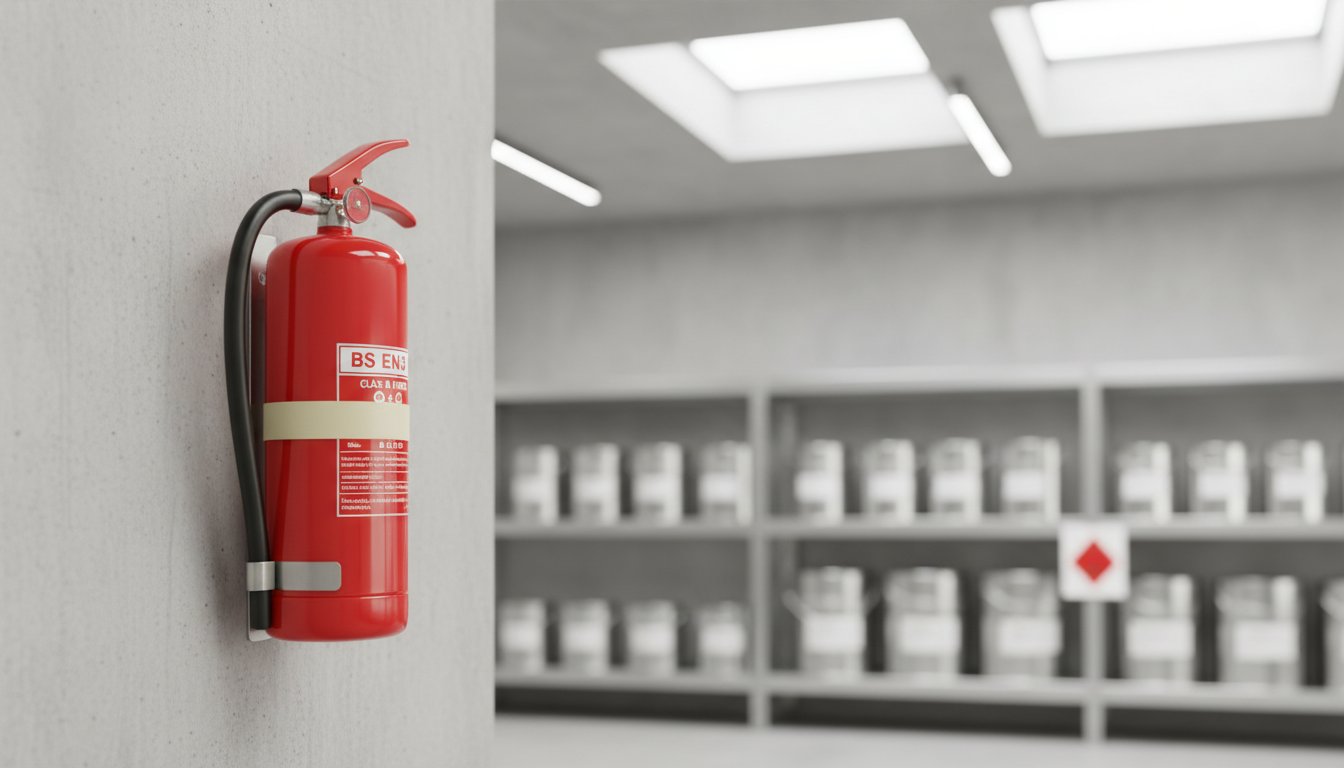
In a commercial setting, reaching for the wrong fire extinguisher can be a critical mistake, especially when flammable liquids are involved. The instinct to use water on a fuel or oil fire, for instance, could lead to disastrous consequences, turning a containable situation into a catastrophic one. This confusion is a common and valid concern for UK business owners responsible for workplace safety. Understanding the unique risks posed by a class b fire-those fuelled by liquids like petrol, paints, and solvents-is the first, most crucial step in protecting your people and property.
As your trusted partner in fire safety, we have created this complete guide to provide clarity and peace of mind. Here, you will find a straightforward, no-nonsense breakdown of everything you need to know to manage these specific risks. We will guide you through identifying Class B fire hazards, selecting the correct type of fire extinguisher with confidence, and understanding the proper techniques to safely control a blaze. This expert advice will empower you to act decisively in an emergency and ensure your business remains fully compliant with UK fire safety regulations.
Key Takeaways
- Understand what defines a class b fire, from common flammable liquids to gases, to accurately assess your specific workplace risks.
- Discover the most critical safety rule for tackling a flammable liquid fire-using the wrong extinguisher can have dangerous consequences.
- Learn how to choose the correct fire extinguisher for your environment by understanding the UK's colour-coding system for Foam, CO2, and Dry Powder.
- Implement effective prevention strategies for the storage and handling of flammable substances to ensure your premises remain compliant and safe.
Defining Class B Fires: The Flammable Liquid and Gas Hazard
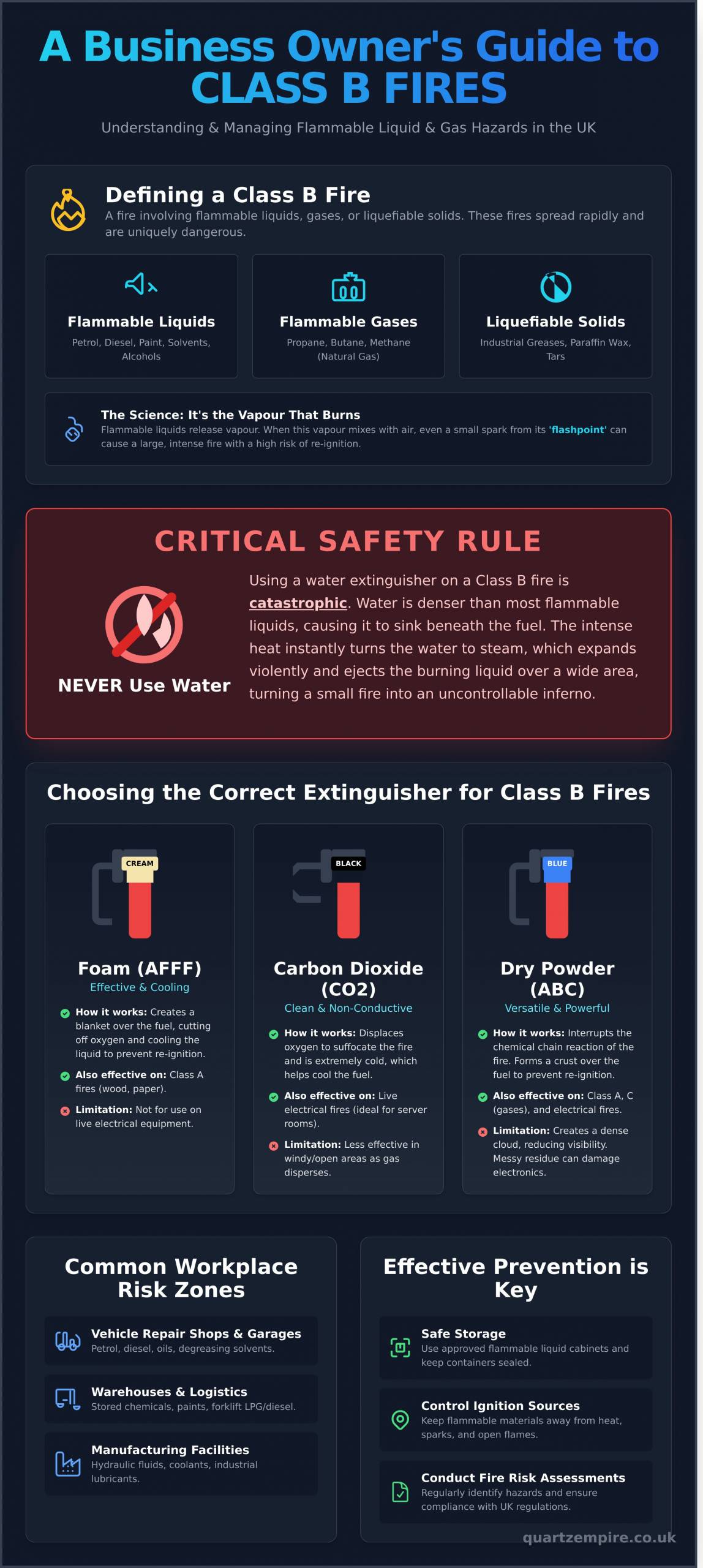
A class b fire is defined as a fire involving flammable liquids, flammable gases, and liquefiable solids such as industrial greases or waxes. Understanding this classification is the critical first step in ensuring your commercial premises are adequately protected. Unlike fires involving solid combustibles, these incidents are fuelled by substances that can spread with alarming speed, creating a volatile and fast-moving hazard. While the fire tetrahedron-fuel, heat, oxygen, and a chemical chain reaction-is always present, the nature of a liquid or gas fuel makes Class B fires uniquely dangerous and requires a specific, targeted response.
Common Fuels in a Class B Fire
To effectively manage risk, it is essential to identify potential Class B fuels within your workplace. These are commonly found in workshops, manufacturing sites, garages, and commercial kitchens. Key examples include:
- Flammable Liquids: Petrol, diesel fuel, industrial alcohols, paints, thinners, and solvents.
- Flammable Gases: Propane, butane, and methane (natural gas).
- Liquefiable Solids: Industrial greases, paraffin wax, and tars.
How Class B Differs from Other Fire Classes
The UK's fire classification system categorises fires to ensure the correct extinguishing agent is used, preventing a dangerous situation from becoming worse. A Class B fire requires a fundamentally different approach to other common types:
- Class A (Solids): Fires involving wood or paper are typically extinguished with water, which cools the fuel. Using water on a Class B fire is catastrophic as it can spread the burning liquid.
- Electrical Fires: Fires involving live electrical apparatus demand a non-conductive agent, such as CO2, to prevent the risk of electric shock.
- Class F (Cooking Oils): These high-temperature kitchen fires require a specialist wet chemical agent that creates a soap-like barrier (saponification) to smother the flames and cool the hot oil.
The Science: Why Flammable Liquid Fires Are So Dangerous
The primary danger of a flammable liquid fire stems from its chemical properties. It is not the liquid itself that burns, but the vapour it releases. When a liquid reaches its 'flashpoint'-the lowest temperature at which it produces enough vapour to ignite-it creates a highly flammable fuel-air mixture. This means even a small spark can trigger a large, intense fire. Furthermore, these fires pose a significant re-ignition risk; simply smothering the flames may not be sufficient if the liquid remains hot enough to continue vaporising and re-ignite once oxygen is reintroduced.
Identifying Class B Fire Risks in Your Commercial Premises
Understanding the theory behind a class b fire is one thing; identifying the specific risks within your own business is the critical next step. Many business owners are surprised to learn that nearly every commercial property houses some form of Class B fire hazard, often in unassuming places. Recognising these potential dangers is not just a matter of best practice-it is a fundamental component of your legal duty to conduct a thorough Fire Risk Assessment.
The primary goal is to identify where flammable liquids or gases are stored and used, and then to ensure they are kept safely away from potential ignition sources. This proactive approach is the most effective way to protect your people, property, and business continuity.
Common Workplace Scenarios and High-Risk Areas
While some environments are obviously high-risk, Class B hazards can be present across many industries. A systematic review of your premises should pay close attention to areas such as:
- Vehicle Repair Shops & Garages: Businesses in the automotive sector, from repair shops to specialists like Surrey Detailing, regularly handle petrol, diesel, lubricating oils, and degreasing solvents—all significant Class B fuels.
- Warehouses & Logistics: Stored chemicals, paints, and forklift refuelling stations (both LPG and diesel) present clear risks.
- Manufacturing Facilities: Hydraulic fluids, industrial lubricants, coolants, and various chemicals used in production processes are common hazards.
- Commercial Kitchens & Hospitality: While known for Class F fires (cooking oils), the storage of flammable gases like propane or butane in cylinders is a distinct Class B risk.
Key Causes and Ignition Sources
A fire requires fuel, oxygen, and an ignition source. In the context of a Class B fire, the fuel is already identified; the focus must therefore be on controlling ignition sources and preventing accidental release. Common causes include:
- Improper Storage: Leaving containers open, using unapproved cabinets, or storing liquids near heat sources are major contributors. Adhering to strict protocols, like those detailed in authoritative HSE guidance on storing flammable liquids, is critical for safety.
- Human Error: Accidental spills during refuelling, decanting, or general handling can quickly create a dangerous vapour cloud.
- Ignition Sources: A stray spark from grinding, static electricity, or faulty electrical equipment can easily ignite flammable vapours.
- Arson: Deliberate ignition remains a significant threat that must be considered in your security and safety planning.
The Role of a Professional Fire Risk Assessment
A professional Fire Risk Assessment provides a structured and expert evaluation of your premises. It moves beyond guesswork to systematically identify every potential fire hazard, including all Class B risks. The assessment evaluates your existing safety measures, highlights areas of non-compliance, and provides clear, actionable recommendations for improvement.
Under the Regulatory Reform (Fire Safety) Order 2005, this assessment is a legal requirement for all non-domestic premises in the UK. Failure to conduct one and act on its findings can lead to severe penalties. Ensure your business is compliant and, most importantly, safe. Book your legally required Fire Risk Assessment today.
How to Safely Extinguish a Class B Fire
When confronted with a fire involving flammable liquids, your immediate actions are critical for safety. The primary extinguishing method is to smother the fire, effectively cutting off the oxygen it needs to burn. However, the most important rule is what not to do. Attempting to tackle a class b fire should only be done if you are trained, have a clear escape route, and are equipped with the correct type of fire extinguisher. If you have any doubt about your ability to control the situation, your priority must be to evacuate immediately and call 999.
The Golden Rule: Why Water is Catastrophic on Liquid Fires
Using a water extinguisher on a flammable liquid fire is exceptionally dangerous and will make the situation far worse. Because liquids like petrol, oil, and solvents are less dense than water, the water sinks beneath the burning fuel. This can cause a violent "slopover," which spreads the flaming liquid across a much wider area. Furthermore, the intense heat can instantly flash the water to steam, causing an explosive eruption. A common household example is a chip pan fire; adding water creates a fireball, and the same hazardous principle applies here.
The Correct Extinguishing Agents for Class B Fires
Choosing a compliant and appropriate extinguisher is non-negotiable for protecting your property and people. The main types suitable for Class B fires are:
- Foam (AFFF): Aqueous Film-Forming Foam extinguishers are highly effective. They discharge a blanket of foam that smothers the fire by cutting off oxygen and simultaneously cools the fuel to help prevent re-ignition.
- Dry Powder (ABC): These versatile extinguishers work by interrupting the chemical reaction of the fire. While effective, they leave a messy residue that can damage sensitive electronics and requires extensive clean-up.
- Carbon Dioxide (CO2): CO2 extinguishers displace oxygen to smother the fire and are extremely cold, providing a rapid cooling effect. They are clean and leave no residue but have a limited range, requiring the user to get closer to the blaze.
Step-by-Step Guide to Tackling a Small Class B Fire
Only ever attempt to fight a fire if it is small, contained, and you feel confident and safe to do so. Your personal safety is the absolute priority.
- Step 1: Sound the Alarm. Alert everyone in the building and ensure the evacuation process has started. Call the fire brigade immediately.
- Step 2: Assess and Approach. Confirm you have a clear, unobstructed exit behind you. Ensure you have the correct type of extinguisher for the fire, a critical component of meeting the UK Government Fire Safety Regulations for commercial premises.
- Step 3: Use the P.A.S.S. Method. From a safe distance, remember this simple technique: Pull the pin. Aim the nozzle at the base of the fire. Squeeze the lever slowly. Sweep from side to side.
- Step 4: Extinguish and Retreat. Apply the extinguishing agent across the base of the flames until the fire appears to be out. Back away from the area, keeping an eye on it in case of re-ignition.
Choosing, Siting, and Maintaining Class B Extinguishers
Selecting the correct fire extinguisher is a critical component of your site's Fire Risk Assessment. It ensures you have the right tool to effectively and safely tackle a potential blaze, protecting both people and property. This section provides a clear guide to choosing, siting, and maintaining your Class B fire safety equipment in full compliance with UK regulations.
Comparing Foam, CO2, and Dry Powder Extinguishers
For a class b fire involving flammable liquids, you have three primary choices. Each has distinct advantages and limitations depending on the specific environment. Understanding these differences is key to making a compliant and safe decision for your premises.
| Extinguisher Type | Best For | Not Suitable For | Key Consideration |
|---|---|---|---|
| Foam (Cream Band) | Liquid spills (e.g., petrol, paint) on solid surfaces. | Live electrical equipment; cooking fat/oil fires. | Forms a cooling blanket over the fuel, preventing re-ignition. |
| CO2 (Black Band) | Fires involving electrical equipment; flammable liquids in confined spaces. | Outdoor use (disperses quickly); deep-seated fires in combustible materials. | A clean agent that leaves no residue but displaces oxygen, requiring caution in small spaces. |
| Dry Powder (Blue Band) | Versatile for Class A, B, and C fires; suitable for vehicles. | Enclosed spaces; areas with sensitive electronic equipment. | Extremely effective but impairs vision and causes corrosive damage to machinery. |
Understanding UK Fire Extinguisher Colour Codes
The UK employs a standardised colour-coding system to allow for rapid identification of an extinguisher's contents. While all modern extinguishers have a signal red body (as required by BS EN3), a coloured band indicates the type of agent inside.
- Cream Band: Foam Extinguishers
- Black Band: Carbon Dioxide (CO2) Extinguishers
- Blue Band: Dry Powder Extinguishers
Correctly identifying these is crucial for ensuring the right extinguisher is used on a fire, preventing accidental escalation.
Legal Requirements for Maintenance and Servicing
Proper maintenance is not just best practice; it is a legal requirement under the Regulatory Reform (Fire Safety) Order 2005. The British Standard BS 5306-3 outlines the servicing schedule needed to ensure your equipment remains reliable and compliant. This includes:
- Monthly Visual Checks: Conducted by a designated staff member to check for obvious damage, correct pressure, and clear, unobstructed access.
- Annual Service: A comprehensive inspection and service performed by a competent, certified technician. This ensures all components are functional and the extinguisher is ready for use.
Neglecting this duty can invalidate insurance and lead to severe penalties. As a trusted partner in fire safety, we provide reliable, accredited services to keep your business protected. Schedule your compliant fire extinguisher servicing with our experts.
Effective Prevention and Control Measures for Class B Fires
While knowing how to extinguish a class b fire is essential, the most effective form of fire safety is proactive prevention. Implementing robust control measures not only protects your people and property but also ensures you remain compliant with UK regulations, including the Control of Substances Hazardous to Health (COSHH). A diligent approach to handling and storing flammable liquids is the foundation of a safe working environment.
Safe Storage and Handling of Flammable Liquids
Adhering to strict protocols for flammable liquids is non-negotiable. All such materials must be stored in approved, sealed containers that are clearly and correctly labelled. These containers should be kept in dedicated, fire-resistant flammable storage or COSHH cabinets, away from ignition sources. Critically, the quantity of flammable liquids kept in the main work area should be limited to the absolute minimum required for immediate operational needs.
Ventilation, Spill Control, and Housekeeping
Good housekeeping is a fundamental fire prevention principle. Work areas must have adequate ventilation to prevent the build-up of flammable vapours, which can easily ignite. It is vital to have appropriate spill control kits readily accessible and to ensure staff are fully trained in their safe use. Maintaining a clean and organised workspace, free from combustible waste materials like oily rags or sawdust, significantly reduces the risk of a fire starting and spreading.
The Importance of Staff Fire Marshal Training
Your staff are your first line of defence. Comprehensive training for designated Fire Marshals is a critical investment in your organisation's safety. A properly trained Fire Marshal can:
- Identify potential fire hazards and promote safe working practices among colleagues.
- Ensure a swift, orderly, and safe evacuation in the event of an emergency.
- Confidently identify the class of fire and, if safe to do so, use the correct fire extinguisher effectively.
Investing in expert training ensures your team is prepared, competent, and capable of protecting your business from the inside out. For professional, accredited fire safety training that gives you peace of mind, contact our certified team at Quartz Empire.
Ensure Your Business is Compliant and Protected
Understanding the significant risks posed by a class b fire is the foundation of a robust safety strategy. As we've detailed, these fires involving flammable liquids and gases demand a specific response, including the correct deployment of CO2 or Dry Powder extinguishers. Ultimately, proactive prevention and a professional assessment of your unique commercial environment are the most effective measures you can take to protect your people and property.
For businesses across Kent, London, and the South East, achieving full compliance doesn't have to be complex. As accredited and certified fire safety experts, Quartz Empire provides a 'no nonsense' approach to safety, giving you complete peace of mind that your responsibilities are met.
Don't leave safety to chance. Ensure your business is protected. Contact Quartz Empire for a comprehensive Fire Risk Assessment. Take the definitive step towards a safer, fully compliant workplace today.
Frequently Asked Questions About Class B Fires
What is the most common cause of a Class B fire in a workplace?
The most common causes of a Class B fire in a workplace involve the accidental ignition of flammable liquids. This often occurs when substances like petrol, industrial solvents, paints, or cleaning agents are spilled or mishandled near an ignition source, such as a spark from equipment or a naked flame. Environments like vehicle repair workshops, manufacturing facilities, and laboratories are particularly at risk due to the regular use and storage of these volatile materials, making correct handling procedures essential for safety.
Can a CO2 extinguisher be used on a Class B fire?
Yes, a CO2 (Carbon Dioxide) extinguisher is highly effective for tackling a class b fire. It works by displacing the oxygen the fire needs to burn and simultaneously cooling the flammable liquid. This makes it an excellent choice, particularly in areas with sensitive electrical equipment, as the CO2 gas leaves no residue behind. This clean application prevents further damage to machinery or electronics that could be caused by foam or powder agents, ensuring a swift and efficient response.
What is the key difference between a Class B and a Class F fire?
The key difference lies in the type of flammable liquid involved. A Class B fire is fuelled by liquids like petrol, solvents, or paints. In contrast, a Class F fire involves cooking oils and fats, such as those found in commercial deep-fat fryers. While both are liquid-based, cooking oils burn at extremely high temperatures. Using a standard Class B extinguisher on a Class F fire can be ineffective and highly dangerous, potentially causing the burning oil to splash violently.
Are petrol and diesel both considered Class B fire risks?
Yes, both petrol and diesel are classified as Class B fire risks. They are flammable liquids derived from petroleum and require the same type of fire-fighting media to be extinguished safely. While they have different properties, such as flash points-with petrol being significantly more volatile-any workplace storing or using either substance must have appropriate Class B rated fire extinguishers readily available. This ensures you are fully prepared to handle an incident involving either of these common fuels.
What are the legal requirements for Class B fire safety in a UK workplace?
In the UK, the legal requirements are governed by The Regulatory Reform (Fire Safety) Order 2005. This legislation mandates that a designated 'Responsible Person' must conduct a thorough fire risk assessment for the premises. This assessment must identify all potential fire hazards, including Class B risks from flammable liquids. Based on this, you are legally required to provide appropriate, correctly-sited, and properly maintained fire extinguishers to ensure your workplace is fully compliant and your people are protected.
How do I know how many fire extinguishers I need for my business?
The number of fire extinguishers required is not based on a simple calculation but is determined by a comprehensive fire risk assessment of your premises. Key factors include the size and layout of your building, the specific fire hazards present, and the travel distance to the nearest suitable extinguisher. For a fully compliant and reliable solution, we strongly recommend a professional assessment by a certified expert who can accurately evaluate your needs and ensure your business meets all legal safety standards.