
The Key Benefits of Integrated Access Control for UK Businesses in 2026
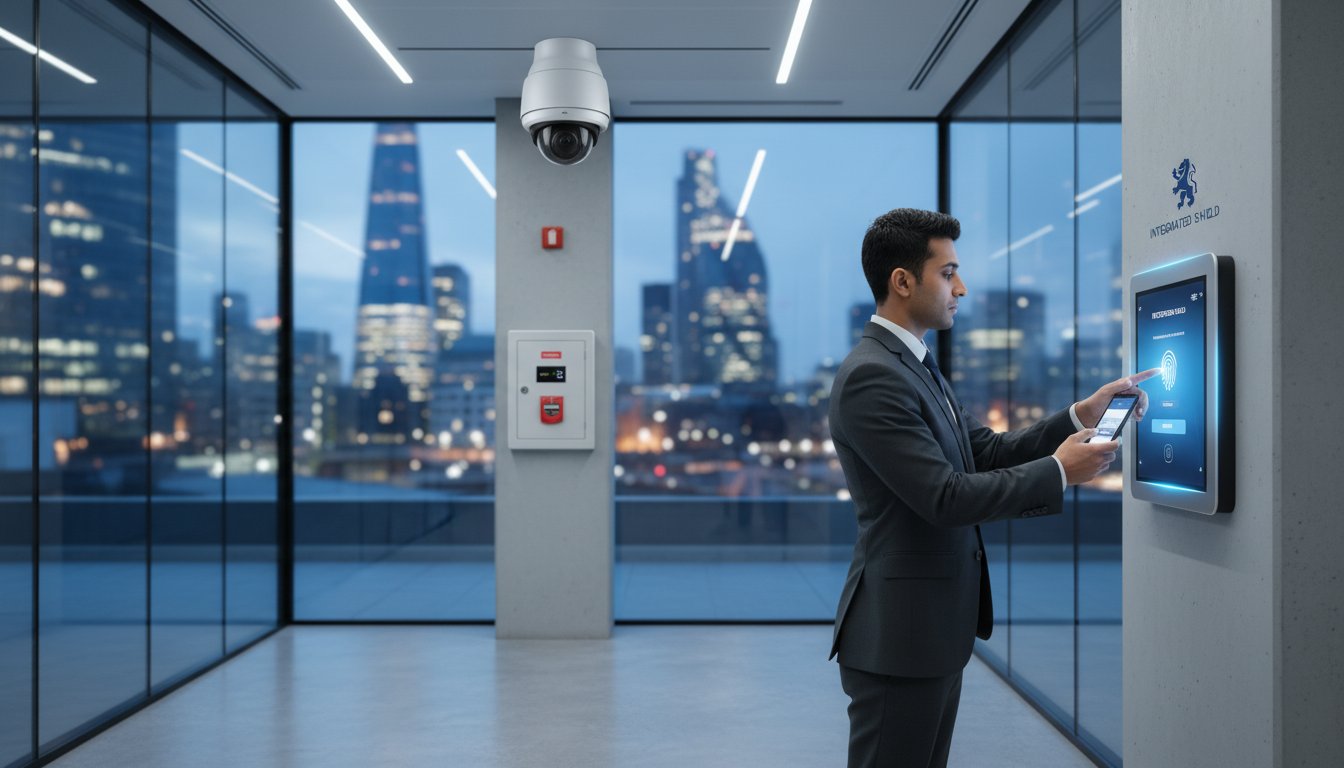
In 2026, relying on disconnected security platforms is no longer just an administrative burden; it is a significant risk to your operational safety. With the UK access control market now valued at 502.62 million dollars, the shift toward unified systems is accelerating as businesses seek to move beyond simple gatekeeping. You likely understand the frustration of managing multiple interfaces or the difficulty of auditing access events during a critical incident. Transitioning to a unified model allows you to experience the full benefits of integrated access control, turning your security infrastructure into a proactive safety hub that automates compliance and streamlines incident response.
We recognize that maintaining regulatory adherence, such as the updated BS 8214 standards for fire doors, requires a meticulous approach to facility management. This article explains how linking your access control with fire and CCTV systems enhances site safety while significantly reducing the workload for your HR and security teams. You'll discover how a unified dashboard provides faster emergency response times and ensures your business remains compliant with the latest UK safety legislation.
Key Takeaways
- Learn how linking CCTV footage to specific entry events provides visual verification and strengthens threat detection across your premises.
- Understand the legal necessity of integrating access control with fire alarm systems to ensure safe evacuations and maintain regulatory compliance.
- Discover the operational benefits of integrated access control, including automated user management and a reduced administrative burden for your security team.
- Identify how consolidating maintenance contracts and unifying security platforms lowers the total cost of ownership for your safety infrastructure.
- Recognise the importance of a professional site survey to identify integration gaps and design a security ecosystem tailored to your facility.
Understanding Integrated Access Control for Modern Organisations
Integrated access control is a unified security ecosystem that connects physical entry points with broader safety systems. For businesses in London and Kent, the traditional lock and key approach no longer meets the demands of modern operations. We're seeing a significant shift toward data-driven platforms that provide a comprehensive view of facility safety. This transition is driven by the need for better visibility and faster response times in busy commercial environments. By centralising your management, you gain total control over every entry point while gathering actionable insights from your security hardware.
Standalone vs. Integrated: The Critical Difference
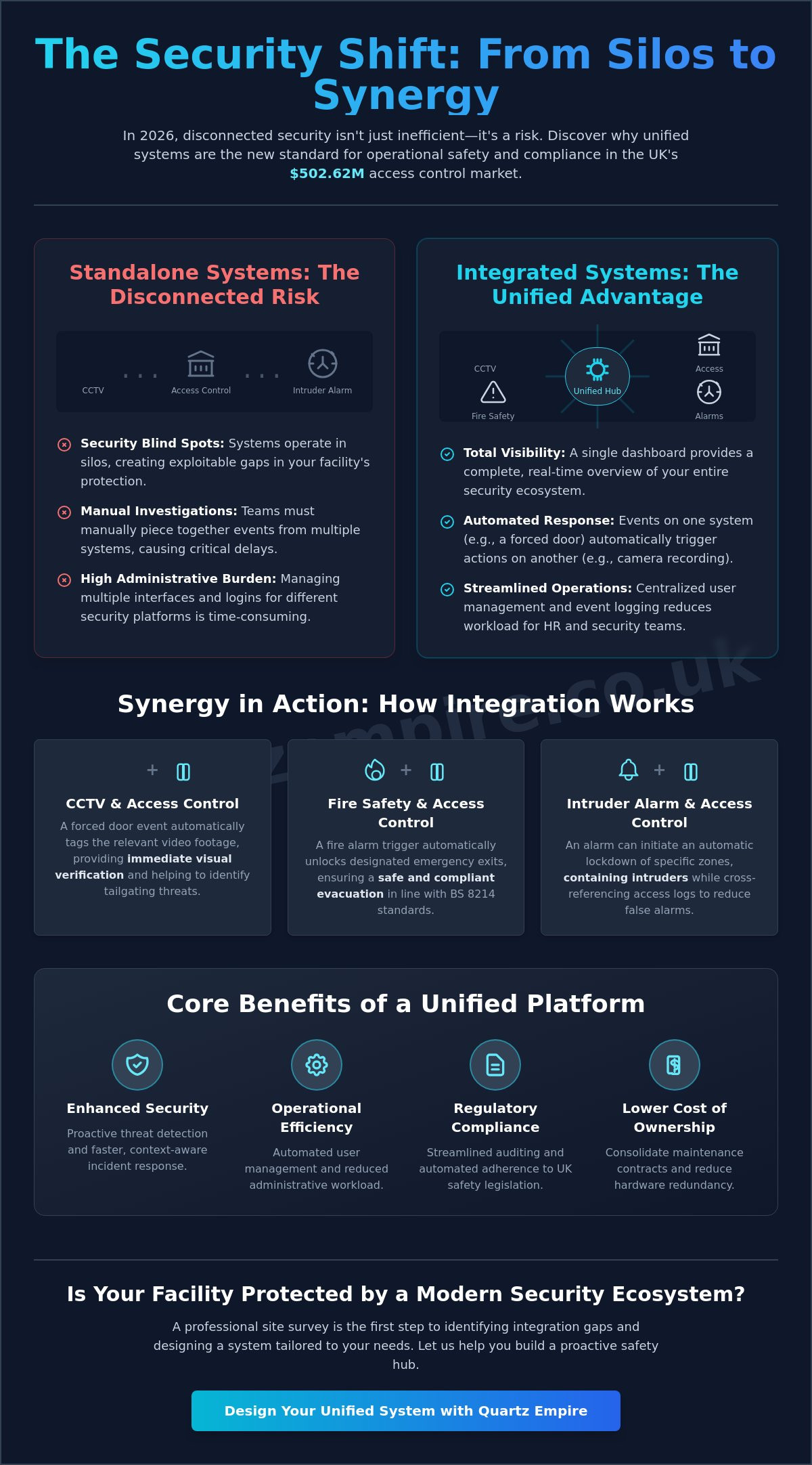
Standalone systems operate in silos, creating blind spots that can be exploited. If your door readers don't communicate with your commercial CCTV or intruder alarms, your team must manually piece together events during an incident. This delay is often unacceptable. One of the primary benefits of integrated access control is the ability to share data across devices in real time. For instance, a forced door can trigger an immediate camera recording and an alert on a central dashboard. Understanding Integrated Access Control involves looking at how specialised software creates a single management interface. This allows facility managers to oversee complex sites without switching between disconnected applications, ensuring no event goes unnoticed.
The Core Components of a Unified System
A robust integrated framework relies on several key elements working in harmony. Identification hardware, such as biometric scanners or RFID readers, verifies credentials at the door. These units connect to centralised controllers that process requests and communicate with management software. This software, often cloud-based, stores user permissions and logs every event for auditing. The framework also incorporates commercial intruder alarms and intercoms, allowing them to feed data back to the primary dashboard. Realising the full benefits of integrated access control requires a professional design that accounts for every sensor and entry point. By linking these components, you ensure that every part of your security strategy supports the others. When an intercom request is made, the system can display the caller's video feed alongside their access history. This technical synergy is why organisations across the South East are upgrading their infrastructure to remove guesswork from facility protection.
Strengthening Security Through System Synergy
Security is most effective when its individual components communicate with each other. One of the primary benefits of integrated access control is the creation of a unified front against unauthorised entry. When your security devices share data, they move from being passive recorders to active participants in your protection strategy. This synergy ensures that every alert is backed by context, allowing your security team to make informed decisions without delay. It's about building a system that doesn't just watch but understands the environment it's protecting.
CCTV and Access Control Integration
Cameras function as the eyes for your access control gatekeeper. In a standalone setup, a door alert might tell you that a badge was used at 3:00 PM, but it won't show you who actually walked through. By linking your readers with commercial CCTV installation, the system provides immediate visual verification. If a door is forced or held open too long, the software automatically tags the relevant video footage and presents it on your dashboard. This automation is vital for identifying "tailgating," where an unauthorised person follows a staff member through a secure point. Video analytics can now detect these anomalies and trigger an alert before the intruder moves deeper into your facility.
Proactive Intruder Alarm Response
The relationship between access control and commercial intruder alarms provides a robust layer of defense. An integrated system can be programmed to initiate a lockdown of specific zones the moment an intruder alarm is triggered. This prevents an intruder from moving between rooms while keeping exit routes clear for authorised staff. It also significantly reduces false alarms. The system can cross-reference an alarm trigger with access logs to determine if a staff member simply entered the wrong code or if a genuine breach is occurring. Precision location data from these combined sensors allows for faster deployment of security personnel to the exact point of the incident.
Beyond immediate response, this synergy creates a comprehensive audit trail. Every entry event is linked to a video clip and a sensor log, which is essential for both internal investigations and external compliance audits. This level of detail is particularly important for businesses in London and Kent that must meet strict industry regulations. Our experts are available to discuss how these technologies can be tailored to your specific site requirements through a professional security consultation. By unifying your hardware, you ensure that your security infrastructure remains resilient against evolving threats while providing a clear record of all site activity.
Enhancing Fire Safety and Regulatory Compliance
Integrating security hardware with life safety systems is a fundamental requirement for any commercial property. One of the most critical benefits of integrated access control is its ability to facilitate a safe and efficient evacuation during an emergency. Under the Regulatory Reform (Fire Safety) Order 2005, the responsible person for a building must ensure that all escape routes are clear and accessible. Manual unlocking of doors during a fire is slow and dangerous. An integrated system automates this process, ensuring that the moment a fire alarm is triggered, all connected entry points release immediately to prevent bottlenecks.
Life Safety and Emergency Egress
The choice of hardware is vital for maintaining compliance and protecting staff. Fail-safe locks, which release when power is cut or an alarm is active, are typically required on designated fire exit routes. In contrast, fail-secure locks remain locked during a power failure and are often unsuitable for primary escape paths. Our team ensures that your fire alarm installation is physically linked to these access points so that magnetic locks don't become obstacles during a crisis. Beyond physical egress, the system provides real-time data to fire marshals by generating instant roll-call reports. These reports show exactly who is still inside the building based on the last recorded badge event, allowing emergency services to focus their efforts where they are needed most.
Meeting BS 5839-1 Standards
Adhering to British Standards requires more than just high-quality hardware. BS 5839-1 dictates how fire detection and alarm systems should be designed and installed in non-domestic premises. Professional installation is mandatory to verify that the links between fire panels and door controllers are robust and tamper-proof. Regular maintenance is also necessary to confirm that this communication remains functional and that the software correctly prioritises fire signals over security lockdowns. Integration supports BS 5839-1 compliance by ensuring the fire alarm system has priority control over all electronically locked doors on the premises.
Neglecting this integration can lead to severe legal consequences and put lives at risk. By unifying these systems, you simplify your path to regulatory adherence while providing a higher standard of protection for your staff. We provide meticulous site assessments across London and Kent to identify any gaps in your current fire safety strategy. This proactive approach ensures your building meets all current UK legislation, including the Fire Safety Act 2021, without compromising the daily security of your assets. One of the lasting benefits of integrated access control is the peace of mind that comes from knowing your safety systems are working in total harmony.
Operational Efficiency and Long-Term Cost Savings
Modern business leaders view security not just as a defensive measure but as a tool for operational refinement. One of the primary benefits of integrated access control is the significant reduction in administrative labour. When your security infrastructure communicates with your business software, you eliminate the need for manual data entry and redundant oversight. This transition allows your team to focus on core activities rather than managing keys or troubleshooting disconnected hardware. By centralising your operations, you create a more agile organisation that responds to change with minimal friction.
Data insights gathered from entry points provide a clear picture of building management and space utilisation. You can identify which areas of your facility are underused or overcrowded, allowing for smarter decisions regarding heating, lighting, and office layout. Integrating these logs with HR and payroll systems also simplifies time and attendance tracking. Instead of relying on manual timesheets, you gain an accurate, automated record of staff presence based on their actual entry and exit times. This level of precision reduces errors and ensures that payroll processing remains efficient and transparent.
Streamlining HR and Administrative Tasks
Managing the lifecycle of an employee becomes far simpler with a unified platform. You can automate access permissions for new hires during the onboarding process and instantly revoke them for leavers, which is essential for maintaining site integrity. This automation reduces the time your team spends on manual log reviews and reporting. For organisations managing multiple sites across London and Kent, a single central office can oversee every location. You don't need a dedicated security manager at every door; instead, you can control permissions and monitor events across your entire regional footprint from one dashboard.
Reducing Maintenance and Insurance Costs
Consolidating your safety infrastructure under a single maintenance partner for your security systems leads to lower long-term costs. You avoid the complexity of managing multiple service contracts and reduce the downtime associated with coordinating different technicians. There is also a potential for lower insurance premiums when you utilise NSI-accredited integrated solutions. Insurers recognise the reduced risk profile of a building that uses professional, well-maintained systems to monitor and control access. This software-driven infrastructure is inherently scalable, allowing you to add new doors or features as your business grows without replacing your entire foundation. To see how these efficiencies can be applied to your specific premises, contact us for a tailored security audit today.
Implementing an Integrated Solution with Quartz Empire
Transitioning from legacy hardware to a unified security ecosystem requires a methodical approach to ensure no gaps in protection occur during the upgrade. We specialise in helping organisations across London and Kent navigate this complexity by designing bespoke systems that align with their specific operational needs. One of the primary benefits of integrated access control is the ability to consolidate multiple security functions into a single, manageable platform. Our process begins with a deep understanding of your facility's current infrastructure and your long-term safety objectives. This ensures that the final solution isn't just a collection of hardware, but a purposeful safety hub that enhances your overall site security.
Step 1: The Comprehensive Security Audit
We start every project with a professional site survey to evaluate your existing fire alarms, CCTV, and entry points for compatibility. Many legacy systems can be integrated into modern platforms, but identifying these opportunities requires technical expertise. During this audit, we pinpoint high-risk areas that demand specific access protocols, such as data rooms or hazardous material storage. It's also the ideal time to ensure your property meets all legal obligations. You can book a professional fire risk assessment with our team to identify any regulatory gaps that your new integrated system should address. This foundational step prevents costly errors and ensures that your new infrastructure is built on accurate data.
Step 2: Custom System Design and Installation
Once the audit is complete, we select hardware from industry-leading manufacturers like Paxton, Texecom, or Hikvision to ensure long-term reliability. Our accredited engineers then carry out the installation across your premises in London or Kent, ensuring all links between fire panels and door controllers are robust and tamper-proof. We don't just install the hardware; we provide thorough training for your team to ensure they can manage the integrated software effectively. This includes setting up automated reporting, managing user permissions, and understanding how to interpret the data insights provided by the dashboard. Our goal is to leave you with a system that is easy to use and provides immediate value to your facility management team.
Ongoing support is a cornerstone of our service for businesses in the South East. We understand that your security needs will evolve, so we offer maintenance packages designed to keep your integrated systems compliant and functional. Regular testing of the communication between your fire alarm and access control is essential for meeting BS 5839-1 standards. By choosing a local partner with deep geographical expertise, you gain a reliable collaborator committed to your long-term safety. You'll experience the full benefits of integrated access control through a system that is professionally designed, meticulously installed, and supported by a team that understands the critical nature of your industry.
Securing the Future of Your Business Infrastructure
Transitioning to a unified security ecosystem is a strategic investment in your organisation's long-term stability. By linking your entry points with fire alarms and CCTV, you move away from reactive monitoring toward a proactive safety model. The benefits of integrated access control are clear; you gain faster emergency response times, automated regulatory compliance, and a significant reduction in administrative burden. This synergy ensures that your premises remain protected against evolving threats while providing the data insights needed for efficient building management.
As NSI Accredited Installers, we specialise in London and South East compliance to help you meet the most stringent safety standards. Our team provides comprehensive fire and security maintenance contracts to ensure your systems remain reliable year after year. Secure your premises with a bespoke integrated access control solution from Quartz Empire. We're ready to help you build a safer and more efficient environment for your staff and assets.
Frequently Asked Questions
What are the main benefits of integrating access control with CCTV?
Integrating these systems provides immediate visual verification of every entry event. When a user presents a credential, the system tags the corresponding CCTV footage for easy retrieval. This prevents unauthorised entry methods like tailgating by allowing security teams to confirm that the person using the badge matches the person on camera. One of the primary benefits of integrated access control is this creation of a robust evidence trail for any investigations.
Does integrated access control meet UK fire safety regulations?
Integrated systems are designed specifically to meet the Regulatory Reform (Fire Safety) Order 2005. A compliant installation ensures that all electronic locks release automatically when the fire alarm is triggered, allowing for unobstructed egress. This automation removes the risk of human error during an emergency. We ensure every setup adheres to BS 5839-1 standards to maintain your legal and insurance obligations across your commercial premises.
Can I integrate my existing security cameras with a new access control system?
Most modern IP-based cameras can be integrated using standard communication protocols like ONVIF. During our initial site survey, we evaluate your current hardware to determine its compatibility with new management software. If your existing cameras are compatible, we can bridge them into the unified dashboard. This approach maximizes your previous investments while providing the primary benefits of integrated access control through a single management interface.
How does integration help with GDPR compliance for business security?
Centralising your security data onto one platform simplifies the management of personal information and log access. You can more easily monitor who has permission to view sensitive logs and ensure that data is only stored for as long as necessary. A unified system also makes it faster to respond to subject access requests by providing a clear, searchable record of an individual's movements and recorded images from a single interface.
Is an integrated security system more vulnerable to cyber-attacks?
While 43% of UK businesses experienced a cyber security breach in the last 12 months according to the 2025/2026 Cyber Security Breaches Survey, integrated systems utilise advanced encryption to protect data. We use hardware from manufacturers that prioritise secure communication protocols and regular software updates. Professional network configuration further reduces risks. A unified system often proves more secure than multiple disconnected platforms that may have inconsistent security patches.
What happens to integrated access control during a power cut?
Integrated systems include battery backup units to maintain operation during power failures. The behaviour of individual doors depends on whether they use fail-safe or fail-secure hardware. Fail-safe doors unlock to ensure safe exit routes, while fail-secure doors remain locked to protect sensitive areas. We design your system to balance these requirements, ensuring that life safety is always prioritised over asset protection during an outage.
How much does it cost to integrate access control with a fire alarm system?
The cost of integration is determined by the complexity of your building and the number of devices involved. Factors such as the age of your current fire panel and the distance between hardware components influence the final project scope. We provide bespoke quotations following a detailed site assessment to ensure the solution fits your specific requirements. This tailored approach ensures you don't pay for unnecessary features while maintaining full compliance.
Can I manage an integrated system for multiple business locations remotely?
Cloud-based management software allows you to oversee multiple sites across London and Kent from any authorised device. You can update user permissions, view live CCTV feeds, and receive alarm notifications in real time without being physically present. This remote capability is essential for businesses with a regional footprint, as it reduces the need for local security administrators at every individual branch or office.