
The Fire Triangle Explained: The Foundation of Workplace Fire Safety

As a business owner or facilities manager, your responsibility for workplace fire safety is absolute. Yet, navigating the complexities of UK regulations can feel daunting, leaving you unsure of where to begin protecting your team and premises. The key to gaining clarity and control lies not in memorising complex legal codes, but in mastering one core principle. This is where a clear grasp of the fire triangle provides the foundation for all effective fire prevention strategies, giving you the confidence to manage risk effectively.
This comprehensive guide offers a no-nonsense explanation of this fundamental concept. We will break down the three essential elements-heat, fuel, and oxygen-and demonstrate how removing just one can prevent a fire from ever starting. You will gain the practical knowledge needed to identify hazards in your workplace, train your staff with authority, and build a robust safety plan that ensures both compliance and genuine peace of mind. Consider this your first step towards becoming a more confident and capable fire safety leader.
Key Takeaways
- All fires depend on three essential elements-heat, fuel, and oxygen. Grasping this concept is the foundation of any effective workplace fire safety strategy.
- Proactively manage risks and ensure compliance by applying the principles of the fire triangle to your daily business operations and safety procedures.
- Discover how every method of fire extinguishment is designed to break the triangle by removing at least one of its three core components.
- Go beyond the basics to understand the fourth critical element of combustion-the chemical chain reaction-and why it matters for modern fire suppression.
What is the Fire Triangle? The Three Essential Elements of Fire
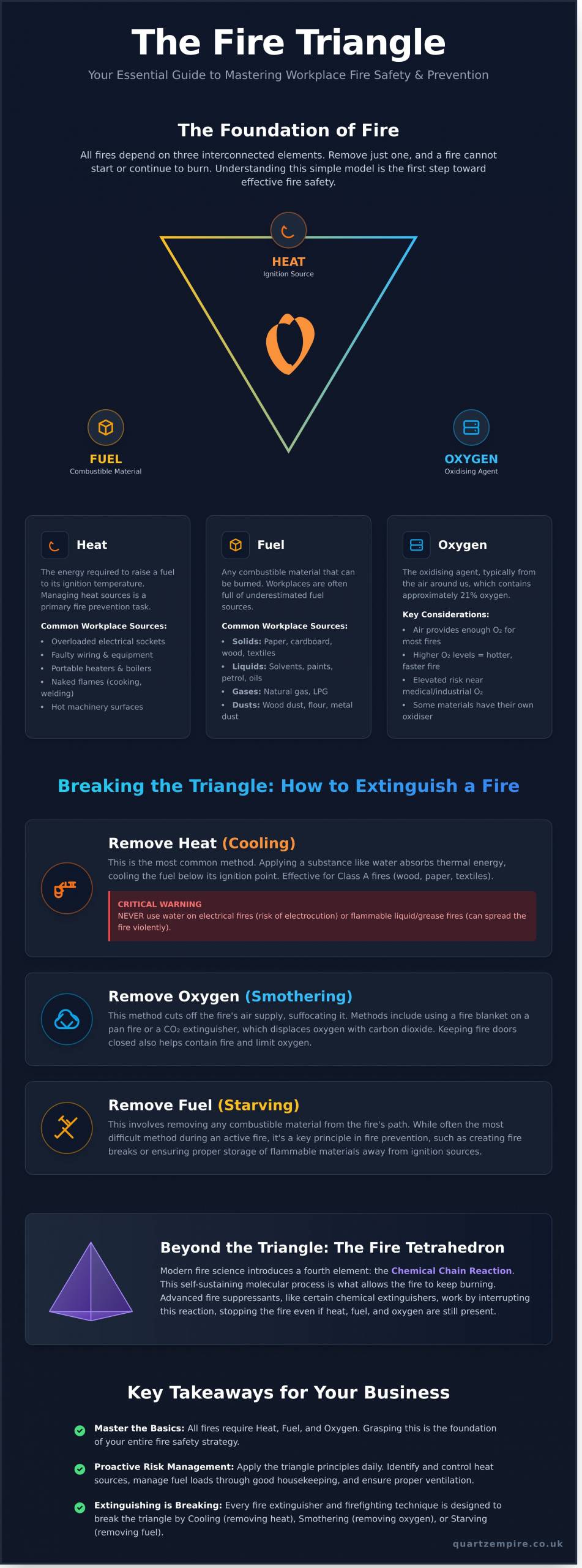
To effectively protect your premises and people, it is essential to understand the basic principles of how a fire starts and spreads. The most fundamental concept in fire safety is the fire triangle, a simple model used to illustrate the three essential components required for most fires to ignite and sustain combustion. For a fire to exist, it must have heat, fuel, and an oxidising agent (usually oxygen). These three elements are critically interdependent.
The core principle is straightforward: if any one of these three elements is removed, the fire cannot start. If a fire is already burning, removing any one of the elements will extinguish it. This simple but effective model, known as the fire triangle, forms the foundation of all modern fire prevention and suppression strategies.
Imagine a triangle with Heat, Fuel, and Oxygen at each of its three points. The fire can only exist when all three sides are connected. Breaking any one of those connections breaks the triangle and stops the fire.
Element 1: Heat (The Ignition Source)
Heat is the energy component required to raise a fuel source to its ignition temperature, initiating the process of combustion. In any commercial environment, potential heat sources are numerous and must be carefully managed. Common sources include:
- Overloaded electrical sockets and faulty wiring
- Portable heaters and central heating equipment
- Naked flames from cooking or maintenance work
- Less obvious sources like static electricity or hot surfaces on machinery
Understanding a material's flashpoint (the lowest temperature at which it produces flammable vapour) is key to risk assessment.
Element 2: Fuel (The Combustible Material)
Fuel is any substance or material that can be burned. In a typical office or workplace, fuel sources are abundant and often underestimated. They can be broadly categorised into solids, such as paper, cardboard, wood furniture, and textiles, or flammable liquids like cleaning solvents, paints, and petrol. The physical state of the fuel significantly impacts its flammability; for example, fine wood dust presents a much higher fire risk than a solid block of wood because its larger surface area allows it to react with oxygen and heat far more rapidly.
Element 3: Oxygen (The Oxidising Agent)
Most fires use the oxygen present in the air as their oxidising agent. The air we breathe contains approximately 21% oxygen, which is more than enough to support a fire. The concentration of oxygen directly affects the intensity of the blaze; an oxygen-rich environment will cause a fire to burn hotter and spread much faster. This is a critical consideration in environments where medical or industrial oxygen is stored or used, as it creates a significantly elevated fire risk. While less common, some materials contain their own oxidising agents and can burn without an external air supply.
Breaking the Triangle: How to Extinguish a Fire
Understanding the fire triangle is not just a theoretical exercise; it provides the direct framework for effective fire extinguishment. To stop a fire, you must remove at least one of its three essential components: heat, oxygen, or fuel. This act of "breaking" the triangle is the fundamental principle behind all firefighting techniques, from a simple water bucket to a sophisticated, compliant fire extinguisher system designed to protect your people and property.
Removing Heat: Cooling the Fire
The most common method of extinguishing a fire is by removing heat. Water is the primary agent for this, as it has a high heat-absorption capacity. When applied to a fire, water absorbs thermal energy until it turns to steam, effectively cooling the fuel to a temperature below its ignition point. This cooling method is highly effective for Class A fires involving solid combustibles like wood, paper, and textiles. However, it is critical to never use water on electrical fires or those involving flammable liquids, as it can dangerously spread the fire or create a risk of electrocution.
Removing Oxygen: Smothering the Fire
A fire cannot sustain itself without oxygen. The smothering method works by cutting off this supply, effectively suffocating the combustion process. This can be achieved physically, such as by covering a small pan fire with a fire blanket, or chemically. A CO2 fire extinguisher, for example, displaces the oxygen in the immediate vicinity with carbon dioxide, starving the fire. This principle also underscores the importance of passive fire protection measures, like keeping fire doors closed during an incident to prevent oxygen from feeding the flames and to contain the blaze.
Removing Fuel: Starving the Fire
The final method involves removing the fire's fuel source. While often the most difficult to achieve during an active blaze, it is a highly effective strategy. Practical examples include shutting off the main gas supply to a burning appliance or creating fire breaks to stop a wildfire from advancing. In a commercial setting, this principle is more commonly applied as a preventative measure. Good housekeeping, such as keeping combustible waste away from ignition sources and maintaining clear space around machinery, is a core tenet of these fire safety principles, as it effectively starves a potential fire before it can even start.
Beyond the Triangle: Introducing the Fire Tetrahedron
While the fire triangle provides an excellent and widely used foundation for understanding how fires start, modern fire safety science recognises a more complete model. For a fire to not only ignite but also sustain itself and grow, a fourth critical element must be present. This introduces a more advanced concept: the fire tetrahedron.
The fire tetrahedron builds upon the three sides of the triangle (Heat, Fuel, Oxygen) by adding a fourth side: the Uninhibited Chemical Chain Reaction. This three-dimensional pyramid shape correctly illustrates that all four elements must be present for a fire to continue burning. If any one of the four sides is removed, the fire will be extinguished.
Image: A diagram of the fire tetrahedron, showing Heat, Fuel, and Oxygen as the base, with the Chemical Chain Reaction forming the peak.
The Fourth Element: Uninhibited Chemical Chain Reaction
This fourth element is the self-sustaining chemical process that allows a fire to burn. As the fuel burns, the heat it generates releases more flammable vapours, which in turn ignite and create more heat. This continuous feedback loop is the chain reaction. Think of it like a row of dominoes; once the first one is pushed, the reaction continues on its own. It is this rapid, exothermic reaction that produces the visible flames and intense heat we associate with fire.
How This Changes Firefighting: Interrupting the Reaction
Understanding the fire tetrahedron is crucial for modern firefighting. While water extinguishers work by removing heat and CO2 extinguishers work by displacing oxygen, some advanced agents are designed specifically to attack the fourth side of the tetrahedron. They interrupt the chemical chain reaction at a molecular level, effectively stopping the "dominoes" from falling.
This method is highly effective and can extinguish fires with remarkable speed. Prime examples include:
- Dry Chemical Extinguishers: Powders like monoammonium phosphate smother the fire but also break the chemical chain reaction.
- Halon-Alternative (Clean Agent) Extinguishers: These gaseous agents are designed to interfere with combustion chemistry without leaving a residue, making them ideal for protecting sensitive electronic equipment.
Recognising that a fire is more than just the classic fire triangle allows for more effective and specialised fire suppression strategies. For an expert assessment of the correct fire extinguishers for your premises, get in touch with our certified team to ensure your property is fully protected.
Applying Fire Triangle Principles in Your Business: A Practical Guide
Understanding the theory of the fire triangle is one thing; applying it to protect your people, property, and legal standing is another. This knowledge is the foundation of a robust, compliant fire safety strategy. By systematically managing fuel, heat, and oxygen in your workplace, you move from a reactive stance to proactive prevention, fulfilling your obligations under UK fire safety law.
Conducting a Fire Risk Assessment
A fire risk assessment is, in essence, a methodical search for potential fire triangles within your premises. The process involves identifying where the three elements could dangerously combine and implementing measures to prevent this. A competent assessor will systematically:
- Identify fuel sources: This includes obvious materials like flammable liquids and paper waste, but also furniture, textiles, and packaging materials.
- Identify heat sources: Look for potential ignition points such as faulty electrical equipment, portable heaters, cooking appliances, and designated smoking areas.
- Evaluate the risk: Determine who is at risk and establish clear procedures to keep fuel and heat sources safely separated through storage, process controls, and good housekeeping.
Implementing Fire Prevention Strategies
Once risks are identified, the next step is to implement controls to manage each side of the triangle. This is a continuous process of maintaining a safe environment.
Heat Control: Enforce a clear policy on the safe use of portable heaters, ensure regular Portable Appliance Testing (PAT) for all electrical devices, and maintain designated smoking areas far from combustible materials.
Fuel Control: Good housekeeping is critical. This means ensuring waste is removed regularly, flammable materials are stored correctly in compliant containers, and exit routes are kept clear of clutter.
The Role of Fire Safety Systems
While prevention is the goal, your fire safety systems are the essential backup for when the three elements of the fire triangle do combine. Fire alarms provide the crucial early warning, while fire extinguishers give trained staff the means to break the triangle on a small scale by removing heat or oxygen. Automated systems like sprinklers are designed to control a fire by removing the heat element, protecting the building and allowing for safe evacuation.
Translating these principles into a compliant and effective safety plan requires expertise. A professional fire risk assessment is the essential first step to protecting your business and ensuring peace of mind.
Secure Your Premises: From the Fire Triangle to Total Compliance
Understanding the fire triangle is more than a simple science lesson; it is the fundamental principle behind effective workplace fire safety. By grasping how heat, fuel, and oxygen interact-and how removing any one of them can extinguish a blaze-you have the foundational knowledge to create a safer environment. This theoretical understanding must be translated into practical, preventative action to truly protect your people, property, and assets from the devastating risk of fire.
Translating this knowledge into a robust, compliant strategy is the critical next step. As BAFE & NSI Gold Accredited experts trusted by businesses across Kent, London, and the South East, Quartz Empire provides a no-nonsense approach to fire safety compliance. We ensure your premises are not just safe, but fully compliant with UK regulations. Don't leave safety to chance. Book a comprehensive Fire Risk Assessment to protect your business and ensure compliance.
Take proactive control of your fire safety today for lasting peace of mind.
Frequently Asked Questions About the Fire Triangle
What are the 3 elements of the fire triangle?
The fire triangle is a simple model for understanding the essential components of a fire. Its three sides represent Heat, Fuel, and an Oxidising Agent (typically oxygen from the air). Fuel is any combustible material, such as wood or flammable liquids. Heat provides the initial ignition energy, while oxygen sustains the chemical reaction. To prevent or extinguish a fire, at least one of these three crucial elements must be removed from the equation, breaking the triangle.
What is the 4th element of fire that creates the fire tetrahedron?
The fire tetrahedron model adds a fourth element to the classic triangle: the Chemical Chain Reaction. While heat, fuel, and oxygen initiate the fire, this self-sustaining reaction is what allows it to continue burning. The heat produced during combustion creates more flammable vapours, which in turn react with oxygen. Advanced fire suppression systems, such as certain chemical extinguishers, are specifically designed to interrupt this chain reaction at a molecular level, effectively stopping the fire.
What is the most common cause of workplace fires?
In the United Kingdom, the most common single cause of workplace fires is faulty or misused electrical equipment. This includes overloaded extension leads, defective wiring, and poorly maintained appliances. Other significant causes are arson, the improper disposal of smoking materials, and issues with portable heating equipment. Regular Portable Appliance Testing (PAT) and a robust maintenance schedule are critical for mitigating these electrical risks and ensuring the safety of your people and property.
How does a CO2 fire extinguisher work in relation to the fire triangle?
A CO2 fire extinguisher is highly effective because it attacks two sides of the fire triangle simultaneously. When discharged, the dense carbon dioxide gas displaces the oxygen in the immediate vicinity, removing the oxidising agent the fire needs to burn. At the same time, the gas is extremely cold as it leaves the extinguisher, which has a significant cooling effect on the fuel source. By removing both oxygen and heat, a CO2 extinguisher rapidly extinguishes fires involving live electricals.
How can I use the fire triangle model for staff fire safety training?
The fire triangle is an excellent and memorable visual aid for staff fire safety training. Use it to explain how fires start and, more importantly, how proactive measures can prevent them. You can teach that good housekeeping, such as clearing away waste paper, removes the 'fuel' element. Likewise, ensuring electrical equipment is switched off and unplugged when not in use helps to remove potential 'heat' sources. This gives your team a practical understanding of how they contribute to workplace safety.
Is a fire risk assessment legally required for my business?
Yes, a fire risk assessment is a legal requirement for almost all businesses and non-domestic premises in the UK. Under the Regulatory Reform (Fire Safety) Order 2005, the designated 'Responsible Person' must conduct a 'suitable and sufficient' fire risk assessment and review it regularly. This process identifies fire hazards and people at risk, ensuring appropriate safety measures are in place. Failure to comply with this legislation can lead to severe penalties, including fines and imprisonment.