
Access Control Systems: A Complete Guide for UK Businesses
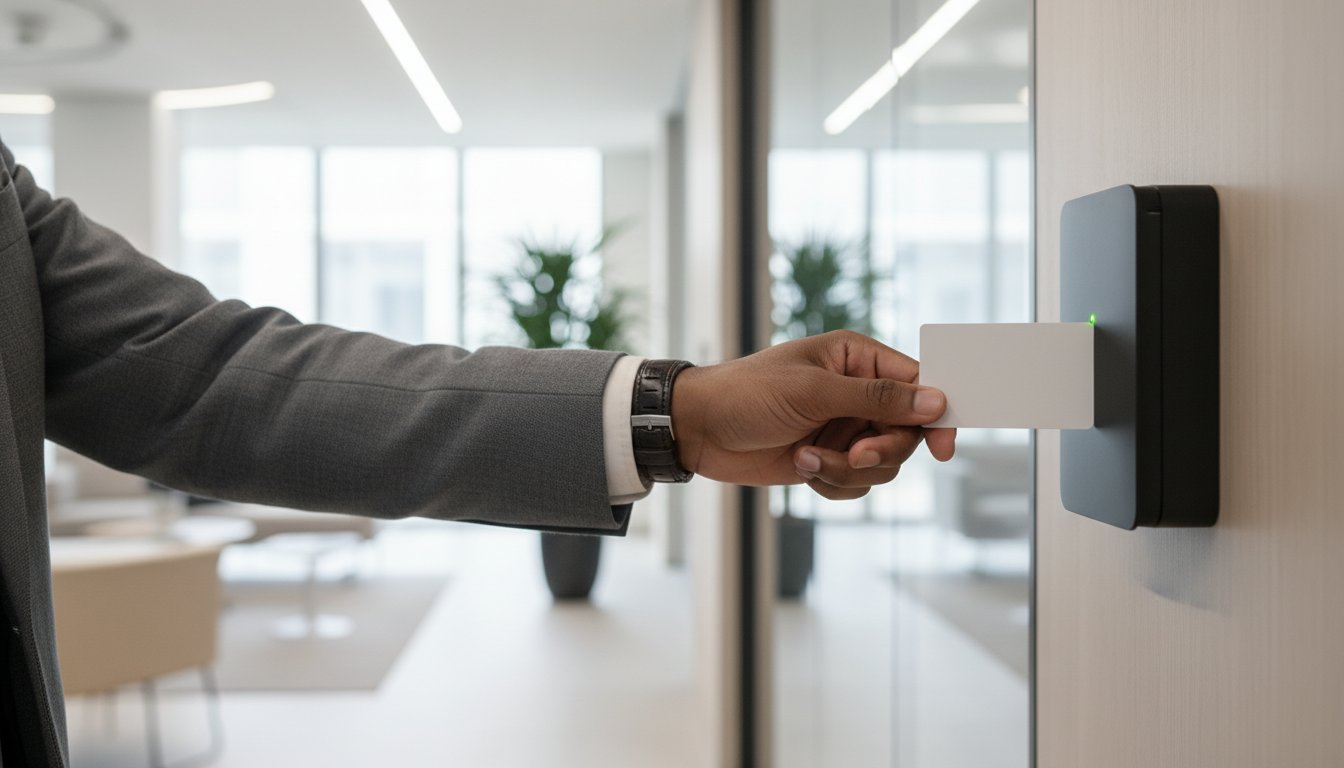
As a UK business owner, protecting your people, property, and assets is a primary responsibility. Yet, navigating the world of security can be a challenge. The term access control often seems complex, raising concerns about high costs, disruptive installation, and choosing a system that is both effective and compliant. How do you know which features are essential for your business, and which installer you can truly trust to secure your premises?
This complete guide is designed to provide clarity and confidence. We will demystify the different types of access control systems, from simple keypad entry to advanced biometric solutions. You will learn how to assess your specific security needs, understand the key features to look for, and confidently choose a reliable, accredited partner to implement a solution that fits your budget and provides genuine peace of mind.
Key Takeaways
- Recognise the critical security limitations of traditional keys and why a modern system is essential for protecting your business assets and staff.
- Understand the four core components of a system and how they work in unison to grant or deny entry to your premises.
- Compare the different types of access control systems to determine the most suitable and compliant solution for your specific operational needs.
- Learn the key questions to ask before you invest, ensuring you choose a system that is effective, scalable, and provides long-term value.
What is Access Control and Why Does Your Business Need It?
In simple terms, access control is a fundamental security practice that manages who is permitted to go where, and when. A modern system gives you precise, electronic control over entry to your premises, specific rooms, or sensitive areas. To understand the full scope of the discipline, it is useful to look at the formal definition of what is access control, which covers both physical and logical security. For businesses across the UK, moving beyond traditional locks and keys is no longer a luxury-it is a critical component of a robust security strategy designed to protect people, property, and assets.
Beyond the Mechanical Key: The Problems You're Facing
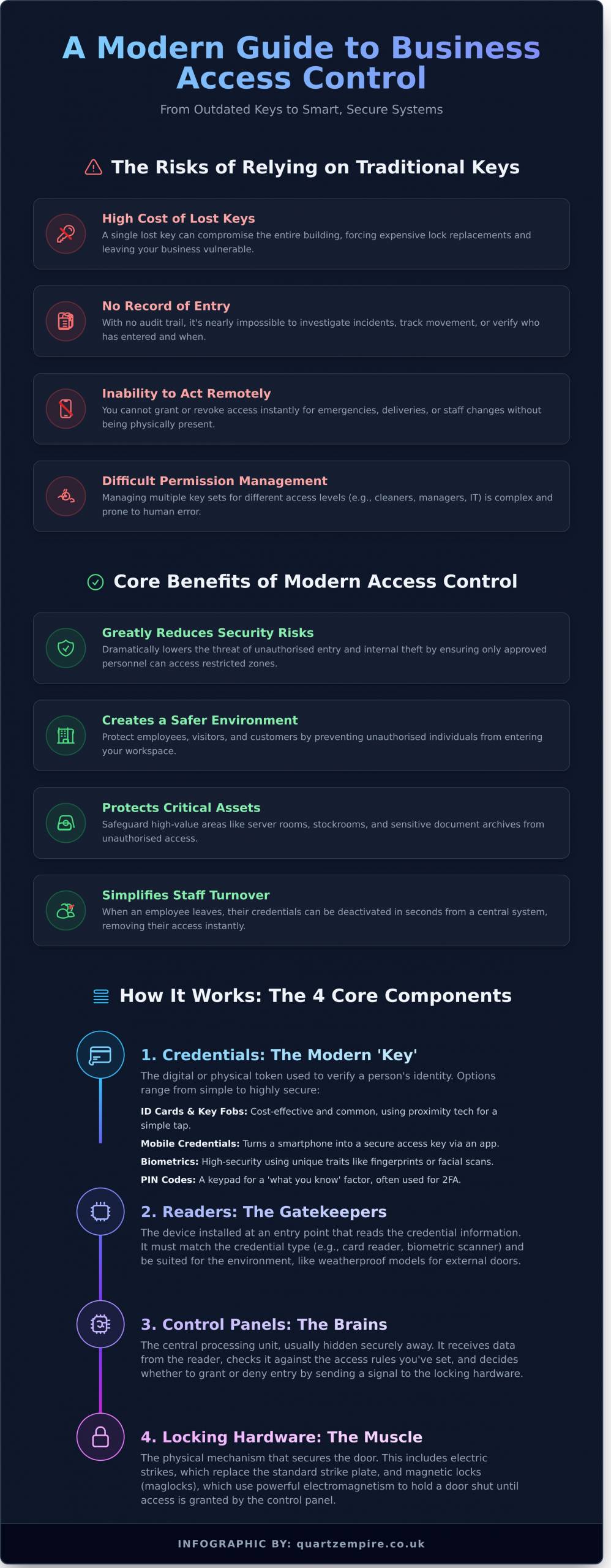
For decades, the simple lock and key was the standard. However, relying on this outdated method exposes your business to significant and often costly risks that a modern system resolves with ease. Key issues include:
- The high cost of lost keys: A single lost or stolen key can compromise your entire building, forcing expensive lock replacements and leaving you vulnerable until the work is complete.
- No record of entry: You have no reliable audit trail of who has entered your premises or when, making incident investigation extremely difficult.
- Inability to act remotely: There is no way to grant or revoke access instantly in an emergency or for an out-of-hours delivery, requiring someone to be physically present.
- Difficult permission management: Managing different keys for various access levels (e.g., cleaners, managers, IT staff) becomes cumbersome and increases the risk of human error.
Core Business Benefits of Modern Access Control
By replacing mechanical keys with electronic credentials like fobs, cards, or mobile apps, you gain immediate and powerful control over your property. This provides tangible benefits and genuine peace of mind.
- Greatly reduces security risks: It dramatically lowers the threat of unauthorised entry and internal theft by ensuring only approved personnel can access restricted zones.
- Creates a safer environment: Protect your employees, visitors, and customers by preventing unknown individuals from entering your workspace, contributing to a secure and productive atmosphere.
- Protects critical assets: Safeguard high-value areas such as server rooms, stockrooms, sensitive document archives, and executive offices from unauthorised access.
- Simplifies staff turnover: When an employee leaves, their credentials can be deactivated in seconds from a central system, completely removing their access without the cost or hassle of changing locks.
Beyond these core advantages, a professional access control system provides a detailed log of all entry events. This data is invaluable for compliance and for conducting efficient investigations. It also simplifies managing temporary access for visitors and contractors, ensuring they only enter designated areas during specific times, giving you the visibility and control needed to properly secure your business.
The Key Components of a Business Access Control System
An effective access control system is more than just a lock on a door; it is a coordinated network of components working together to protect your people and property. To make an informed decision, it is essential to understand the four core elements that form the foundation of any professional security solution. Think of them as a dedicated security team, each with a specific and vital role.
1. Credentials: The Modern 'Key'
A credential is the digital or physical token used to verify a person's identity. It replaces the traditional metal key and offers far greater control and security. The right choice depends on your balance of convenience, cost, and required security level. Options include:
- ID Cards & Key Fobs: The most common and cost-effective solutions, using proximity technology to grant access with a simple tap.
- Mobile Credentials: Highly convenient, turning an employee's smartphone into their access key via a secure application.
- Biometrics: For high-security areas, this uses unique human traits like fingerprints or facial scans, offering a 'what you are' factor that is nearly impossible to duplicate.
- PIN Codes: A keypad provides a 'what you know' factor, often used in combination with a card for two-factor authentication.
2. Readers: The Gatekeepers
The reader is the device installed at the entry point-be it a door, gate, or turnstile. Its job is to act as the gatekeeper, reading the information from the credential and securely transmitting it to the control panel. The type of reader must match the credential, ranging from simple proximity card readers and keypads to advanced biometric scanners. When selecting a reader, it is crucial to consider its suitability for the environment, such as choosing a durable, weatherproof model for external doors.
3. Control Panels: The Brains of the Operation
Hidden securely away from the door, the control panel is the central processing unit of the system. It is the true brain of the operation, receiving data from the reader and making the final decision. The panel cross-references the credential against its stored database of permissions and, if authorised, sends a signal to release the electronic lock. This certified hardware is the backbone of your access control system, securely storing all user permissions and event logs on-site.
4. Management Software: Your Command Centre
The management software provides the user-friendly interface to control and monitor your entire system. This is your command centre, where administrators can perform critical tasks with ease. From a desktop or cloud-based portal, you can add or revoke user access instantly, set specific time schedules for entry, and run detailed reports to see who went where and when. Leading systems from trusted providers like Paxton offer intuitive software that simplifies security management.
Types of Access Control Systems: Which is Right for You?
Selecting the correct architecture for your access control system is a critical decision that impacts security, scalability, and day-to-day management. The right choice depends entirely on your business's size, the number of doors you need to secure, and your operational requirements. Below, we outline the three primary system types to help you identify the most suitable solution for protecting your premises.
Standalone Access Control
Ideal for securing a single door or a very small number of access points, such as a server room or main office entrance. These systems are self-contained, with all electronics and programming handled directly at the keypad or reader. While highly cost-effective for basic needs, they lack central management, meaning you cannot track entry events or easily update user credentials across multiple doors.
This category includes a wide range of modern digital door locks. While many providers focus on residential security, the technology they offer serves as a great example for small business applications. For instance, specialists like AN Digital Lock showcase a variety of high-tech solutions that demonstrate how advanced and accessible these standalone systems have become.
- Best for: Small shops, internal sensitive rooms, or sites with one or two secure doors.
- Key benefit: Low initial cost and simple installation.
Networked (On-Premise) Systems
This is the traditional, robust solution for many small to medium-sized businesses. All door readers are wired to a central control panel located on your property, which is managed by software installed on a local server. This architecture provides you with complete control over your security infrastructure, offering detailed audit trails, customisable access levels, and integration with other systems like CCTV and intruder alarms.
- Best for: Offices, warehouses, and schools requiring comprehensive, on-site control.
- Key benefit: Full ownership and control of system data and hardware.
Cloud-Based (ACaaS) Systems
Access Control as a Service (ACaaS) represents the modern, flexible approach. Hardware on-site communicates directly with a secure cloud platform, eliminating the need for a dedicated on-site server. Management is handled remotely via a web browser or mobile app, providing unparalleled convenience and scalability. This is the optimal solution for businesses with multiple locations or those seeking to reduce their IT infrastructure burden.
- Best for: Multi-site businesses, growing companies, and organisations favouring operational efficiency.
- Key benefit: Ultimate flexibility, remote management, and easy scalability.
Choosing the right system is fundamental to creating a reliable and effective security strategy. For businesses in Kent, London, and the South East, our certified experts can provide a no-nonsense assessment to determine which access control architecture aligns perfectly with your security goals and budget. Contact our team today to ensure your property is properly protected.
How to Plan Your Access Control Installation
Investing in an access control system is a significant step towards securing your business. A well-planned installation ensures your system not only meets your current needs but also provides long-term value and scalability. Following a structured approach removes guesswork and guarantees a solution that truly protects your people, property, and assets. By asking the right questions upfront, you can build a robust security foundation that grows with your business.
Step 1: Assess Your Security Needs and Risks
The first step is a thorough audit of your premises and operational requirements. A detailed assessment will form the blueprint for your system design. Begin by identifying every area that needs securing and defining precisely who requires access. Consider the specific vulnerabilities your business faces.
- Entry Points: List all doors, gates, server rooms, and barriers that require controlled access.
- Access Levels: Determine who needs access to which areas and at what specific times (e.g., employees, contractors, cleaning staff).
- Unique Risks: Evaluate potential threats such as stock loss in a warehouse, data theft from a server room, or ensuring staff safety in sensitive areas.
Step 2: Consider Integration with Other Security Systems
A modern access control system performs best when it works in harmony with your other security measures. Integration creates a smarter, more responsive security ecosystem. For example, linking your system with CCTV provides visual verification of an access event, allowing you to see who is entering a restricted area. Integration with your fire alarm can automatically unlock doors on designated escape routes during an emergency, while connecting to an intruder alarm can automatically arm the system when the last person leaves the building, ensuring complete peace of mind.
Step 3: Choose a Compliant and Accredited Installer
The quality of your installation is just as important as the quality of the hardware. Partnering with a certified and professional installer is non-negotiable for ensuring your system is reliable, compliant, and effective. In the UK, look for accreditations from bodies like the National Security Inspectorate (NSI) or the Security Systems and Alarms Inspection Board (SSAIB). These certifications are your guarantee that the installer is competent, properly insured, and works to the highest British and European standards.
An accredited expert will not only install your system correctly but also provide ongoing maintenance and support, ensuring its long-term performance. Quartz Empire Fire & Security Ltd is an accredited installer for Kent and London, providing compliant and reliable security solutions you can trust.
Your Next Step Towards Total Business Security
As we've explored, implementing a modern security system is a critical investment in protecting your people, property, and assets. Understanding the core components and carefully selecting the right type of system for your unique operational needs are the foundational elements of a successful strategy. A well-planned and professionally installed access control solution provides not just security, but complete peace of mind and operational efficiency.
As an NSI Gold Accredited Installer and a trusted partner for hundreds of businesses across Kent, London, and the South East, Quartz Empire has the certified expertise to design and install a system that is both compliant and reliable. Our no-nonsense approach means we work with you to understand your exact requirements, ensuring you get the right solution for your premises without compromise.
Ready to enhance your security and gain full control over who enters your property? Get a no-obligation quote for your business security. Take the decisive step towards a more secure future for your business today.
Frequently Asked Questions About Access Control
How much does a business access control system cost?
The cost of a business access control system varies significantly based on your specific requirements. Factors include the number of doors to secure, the type of readers chosen (e.g., keypad, card/fob, or biometric), and the complexity of the management software. A basic, single-door standalone system can start from approximately £1,000. For a precise and compliant solution tailored to your premises, we recommend a professional site survey and a bespoke quotation from one of our expert engineers.
What happens to the access control system during a power cut?
In the event of a power failure, systems are configured to be either 'fail-safe' or 'fail-secure'. Fail-safe locks will automatically unlock, which is crucial for fire escape routes. Fail-secure locks remain locked, maintaining the security of sensitive areas. Most modern, professionally installed systems include a reliable battery backup. This ensures the system remains fully operational for a period, providing uninterrupted security and peace of mind for your business until mains power is restored.
Can access control be installed on any type of door?
Yes, access control solutions can be fitted to almost any type of door, including wood, metal, glass, and automatic sliding doors. The key is selecting the correct electronic locking mechanism for the door's construction and function, such as a magnetic lock (maglock) or an electric strike. Our accredited engineers will conduct a thorough site survey to assess your existing doors and recommend the most reliable and secure hardware for a seamless and effective installation.
How does an access control system comply with GDPR regulations?
A modern access control system is designed with data protection in mind. The system logs personal data, such as entry times and user identities, which falls under GDPR. To ensure compliance, the system's software provides secure, encrypted data storage and allows you to define clear user permissions, restricting who can view or manage this sensitive information. As the data controller, it is your responsibility to manage this data according to a clear policy, which our systems are designed to support.
Is it difficult to manage an access control system?
Not at all. Modern systems are designed to be highly intuitive and user-friendly. Day-to-day management is typically handled through a simple software interface on a PC or a web browser. From this central point, you can easily add or remove users, assign or revoke access permissions, set time-based access schedules, and generate reports on door activity. We provide full training upon installation to ensure you are confident in managing your system effectively from day one.
How can I manage visitor access with one of these systems?
Visitor management is a key feature of a professional system. You can issue temporary credentials, such as a visitor pass or fob, that are programmed to be active only for the duration of their visit. For a more streamlined approach, many systems integrate with a video or audio intercom, allowing your staff to visually verify and grant access remotely. It is also possible to issue time-limited PIN codes for contractors or one-time visitors, ensuring secure and controlled entry.