
Fire Risk Assessment for Industrial Units: The Complete Compliance Guide

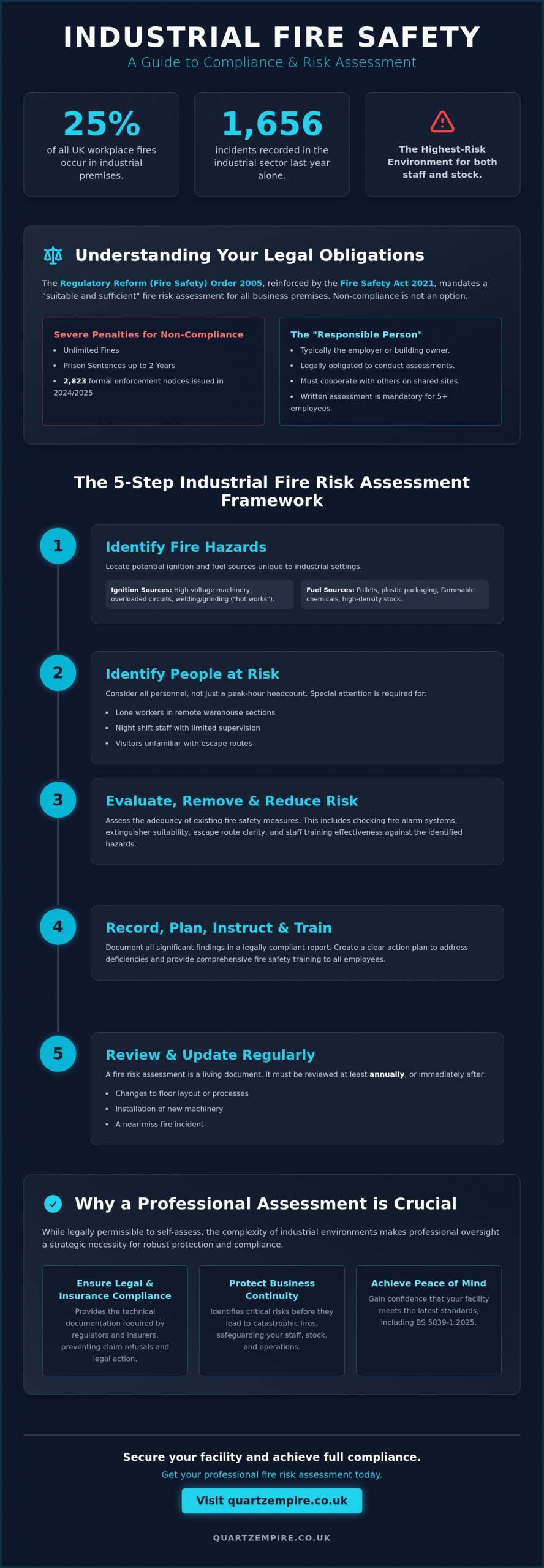
Did you know that industrial premises account for 25% of all workplace fires in the UK? With 1,656 incidents recorded in the last year alone, the industrial sector remains the highest-risk environment for both staff and stock. As a "Responsible Person," you likely feel the weight of the Regulatory Reform (Fire Safety) Order 2005 and the pressure to manage high-density fuel loads. Securing a professional fire risk assessment for industrial units is not just a legal hurdle; it's a strategic move to protect your business continuity and ensure you meet the latest safety standards.
We recognize that managing these complex obligations while avoiding business interruption is a constant challenge. This guide provides everything you need to achieve full compliance under the latest BS 5839-1:2025 standards. You'll learn how to identify warehouse-specific hazards, understand your duties under the Fire Safety Act 2021, and implement the necessary fire alarm and extinguisher services to ensure your facility passes its next inspection with confidence. Read on to discover how professional oversight can secure your staff, your stock, and your legal standing.
Key Takeaways
- Understand your legal obligations under the Regulatory Reform (Fire Safety) Order 2005 and the specific duties of the designated "Responsible Person."
- Master the methodical five-step framework required for a thorough fire risk assessment for industrial units to ensure full site coverage.
- Identify how high fuel load density and open-plan warehouse layouts impact fire behavior and your overall safety strategy.
- Learn to prioritize remedial works through a structured Action Plan that addresses critical safety gaps without unnecessary business interruption.
- Gain insights into how professional assessments provide the technical documentation needed for insurance and regulatory peace of mind.
Legal Requirements: The Regulatory Reform (Fire Safety) Order 2005
The Regulatory Reform (Fire Safety) Order 2005 (FSO) serves as the primary legal framework for fire safety in England and Wales. It mandates that every business premises must have a "suitable and sufficient" fire risk assessment. Recent legislative updates, including the Fire Safety Act 2021 and the Fire Safety (England) Regulations 2022, have tightened these requirements. For those managing complex environments, a professional fire risk assessment for industrial units ensures that technical hazards are identified before they lead to catastrophic failure. The law is clear. Major violations can result in unlimited fines and prison sentences of up to two years. Enforcement is rising. Fire and rescue services issued 2,823 formal enforcement notices in the 2024/2025 period, the highest number since 2013.
Beyond criminal prosecution, non-compliance carries heavy financial risks. Most commercial insurers require proof of a valid assessment as a condition of coverage. If a fire occurs and your documentation is outdated or insufficient, the insurer may refuse to settle the claim. This often leads to total business failure. Maintaining an up-to-date fire risk assessment for industrial units is a fundamental requirement for protecting your assets and your liability. It establishes a baseline of safety that protects your staff and your investment.
Who is the "Responsible Person" in an Industrial Unit?
The law places the burden of safety on the "Responsible Person." In an industrial context, this is typically the employer or the building owner. Shared industrial estates create overlapping duties. Tenants are responsible for their internal workspace, while landlords usually manage communal areas and shared Fire Alarm System Installation & Maintenance. All parties have a legal duty to co-operate. You must share information about risks that might affect your neighbors, such as the storage of flammable chemicals or high-density packaging materials.
When is a Professional Assessment Legally Required?
A written record of your Risk assessment is mandatory if you have five or more employees. While the law allows you to conduct your own review, the high-risk nature of manufacturing and logistics makes this risky. Industrial units typically contain complex machinery, large fuel loads, and intricate escape routes that require expert eyes. You should review your assessment at least annually. Immediate updates are also required if you change your floor layout, install new machinery, or experience a near-miss incident. Professional assessments provide the technical documentation needed for insurance and regulatory peace of mind.
The 5 Key Steps of an Industrial Fire Risk Assessment
A successful fire risk assessment for industrial units relies on a disciplined, five-step framework. This methodical approach ensures that no corner of a warehouse or factory is overlooked. It isn't enough to simply glance at a floor plan. An assessor must physically walk through the entire unit to observe real-world conditions. This process ensures the resulting document is "suitable and sufficient," a legal standard that requires the assessment to be proportional to the site's specific risks. Documenting these findings in a compliant format is vital for both legal protection and insurance validity.
Step 1 & 2: Identifying Hazards and People at Risk
Industrial environments present unique challenges that standard office assessments don't cover. We begin by locating ignition sources. In a factory setting, this includes high-voltage machinery, overloaded electrical circuits, and "hot works" like welding or grinding. Next, we identify fuel sources. Modern logistics centers often contain massive fuel loads in the form of wooden pallets, plastic packaging, and hazardous chemicals. For a deeper look at these technical challenges, experts often refer to specialized Fire Risk Analysis For Industrial Buildings.
Identifying people at risk is equally critical. You must consider more than just the peak-hour headcount. Assessors look for lone workers in remote parts of the warehouse, night shift staff who may have limited supervision, and visitors who aren't familiar with your escape routes. Protecting these individuals requires a clear understanding of how a fire might spread through your specific layout and structural design.
Step 3, 4 & 5: Evaluate, Record, and Review
Once hazards are identified, we evaluate the adequacy of your existing safety measures. This includes a technical review of your current fire alarm installation to ensure it provides sufficient coverage for the noise levels and scale of an industrial unit. If the existing system is found wanting, it becomes a "significant finding" in the final report. We also assess the placement and type of fire extinguishers available to your team.
Recording your findings is the most vital step for legal compliance. Every fire risk assessment for industrial units must conclude with an actionable safety plan. This plan prioritizes tasks based on risk level, such as repairing a faulty fire door or scheduling Fire Marshal Training for new staff. Finally, the process is never truly finished. You're legally required to review the assessment regularly. We recommend an annual review or an immediate update if you introduce new machinery or change your storage configurations.
Common High-Risk Hazards in Factories and Warehouses
Industrial environments present a unique set of structural and operational challenges that differ significantly from standard commercial properties. The open-plan nature of most warehouses allows for an unrestricted flow of oxygen, which can lead to incredibly rapid fire spread. The density of modern logistics centers, particularly those utilizing high-bay racking, significantly increases the available fuel load. This vertical storage often creates a "chimney effect," where heat and flames rise rapidly through the racking. This can bypass traditional ceiling-level detection until the fire is well-established. A professional UL Solutions guide to fire risk assessments emphasizes that these complexities require a technical understanding of fire dynamics to ensure adequate protection.
Mezzanine floors are another common feature that complicates fire safety. These structures often lack fire-rated separation from the main warehouse floor, potentially exposing staff to rising smoke and heat. Restricted escape distances on these levels mean that every second counts. This makes the strategic placement of correct fire extinguisher types a critical component of your safety infrastructure. Ensuring your team has the right tools to tackle a small fire before it scales is a fundamental part of a robust fire risk assessment for industrial units.
Hazardous Materials and Chemical Storage
Hazardous materials and chemical storage require meticulous management under COSHH regulations. During an assessment, we analyze how flammable liquids, gases, and aerosols are contained. Proper bunding is essential to prevent liquid spills from spreading across a warehouse floor. Specialized ventilation must also be in place to reduce the risk of explosive atmospheres forming in enclosed storage areas. These measures don't just protect your stock; they're vital for the mental well-being and physical safety of your workforce.
Electrical Safety and Forklift Charging Stations
Electrical safety remains a primary concern, specifically regarding forklift battery charging stations. These areas combine high-current electrical loads with the production of flammable hydrogen gas, creating a significant ignition risk. We frequently find that older industrial units in London and Kent struggle with overloaded circuits that weren't designed for modern, heavy-duty machinery. Regular Fixed Wire Testing (EICR) is essential to identify hidden faults in these aging systems. Identifying these risks early through a fire risk assessment for industrial units prevents business interruption and ensures long-term operational stability.
Managing Remedial Works and Achieving Compliance
Once your fire risk assessment for industrial units is complete, you'll receive a detailed report outlining necessary improvements. These are known as remedial works. We define remedial works as the essential corrective actions required to bring a building up to legal safety standards. In regions like London and the South East, industrial architecture varies significantly. Owners of Victorian-era brick warehouses often face different challenges than those managing modern steel-frame units. While older buildings might require upgrades to timber floor fireproofing, modern units typically focus on maintaining complex smoke ventilation systems and high-bay racking sprinklers. Addressing these findings promptly is the only way to move from a state of identified risk to full legal compliance.
Prioritising Fire Safety Improvements
The Action Plan within your assessment report categorizes tasks by their level of urgency. High Priority items represent an immediate danger to life or property and require swift intervention. This might include repairing a non-functional fire door or clearing a blocked emergency exit. Low Priority items often focus on best practices or long-term structural enhancements. You don't need to halt production to achieve compliance. We recommend scheduling significant safety upgrades during planned maintenance windows to avoid disrupting your operations. Fire compartmentation is a vital focus for industrial sites. This involves using fire-resistant materials to seal gaps around service pipes and cables, ensuring that fire and smoke are contained within a specific zone. This protection is essential for keeping escape routes clear for your staff.
Maintaining Your Fire Safety Systems
Achieving compliance is a continuous process rather than a one-time event. Regular security systems maintenance is an integral part of a holistic safety strategy. Your fire alarm systems, extinguishers, and emergency lighting must be kept in peak condition through a rigorous servicing schedule. For large warehouse floorplans, functional emergency lighting is non-negotiable. If power fails during a fire, your team needs clear illumination to navigate long aisles and reach exits safely. You must maintain meticulous logbooks of all testing, as these records serve as your primary evidence of compliance during an audit. Ensuring these systems are integrated into your fire risk assessment for industrial units provides a foundation of safety that protects your staff, stock, and long-term business stability.
Ensure your facility meets every legal standard by booking a professional Fire Risk Assessment with our expert team today.
Professional Fire Risk Assessments by Quartz Empire
Quartz Empire provides a specialized approach to fire safety that recognizes the unique architectural demands of the industrial sector. Our team focuses on delivering a fire risk assessment for industrial units that goes beyond basic compliance to establish a foundation of trust and reliability. We act as a reliable collaborator for your long-term safety needs. By utilizing accredited assessors, we ensure that every technical detail is meticulously examined. This includes everything from smoke ventilation in high-bay racking to the integrity of fire compartmentation. Our reports are comprehensive and provide a clear, actionable roadmap for any necessary remedial works. We understand that your priority is maintaining an operational facility. Our recommendations are designed to be practical and effective without causing unnecessary business interruption.
Our Expertise in London and Kent
We have extensive experience working within local industrial estates across Dartford, Croydon, and the wider South East. This regional focus allows us to understand the specific expectations of the London Fire Brigade (LFB) and Kent Fire & Rescue. Different authorities often have varying priorities during audits. Our familiarity with these nuances helps our clients avoid formal enforcement notices and potential prosecutions. Whether you manage a modern logistics hub or a complex, multi-use industrial building, we provide custom solutions that reflect the actual risks of your site. Our steadfast commitment to professional standards ensures that your business remains protected. This meticulous focus on regulatory adherence provides a sense of safety and stability for your stakeholders.
Next Steps: Securing Your Premises
Securing your facility starts with a professional site survey. During this initial phase, our assessors conduct a methodical walk-through of your industrial unit to identify hazards and evaluate existing safety measures. Following the inspection, we deliver a detailed report that includes a prioritized Action Plan. This document serves as your primary evidence of regulatory adherence for both fire authorities and insurance providers. If your assessment identifies gaps in your infrastructure, we provide integrated support through our Fire Alarm System Installation & Maintenance and Fire Extinguisher Services. This holistic approach ensures that your safety strategy is seamless and robust.
The process from inspection to compliance is straightforward:
- Schedule an initial site survey to evaluate your premises.
- Receive a comprehensive fire risk assessment report with prioritized findings.
- Implement necessary remedial works with our technical support.
- Maintain your systems through regular testing and professional servicing.
Contact Quartz Empire today to discuss your requirements and schedule your fire risk assessment for industrial units. Our expert team is ready to help you achieve full legal compliance and long-term operational stability.
Securing Your Industrial Facility for the Future
Managing fire safety in high-risk environments requires more than meeting basic legal standards. It's about establishing a foundation of stability for your operations. We've discussed how the Regulatory Reform (Fire Safety) Order 2005 mandates a meticulous approach to safety, particularly when dealing with the high fuel loads and complex layouts typical of modern warehouses. By prioritizing remedial works and maintaining rigorous service logbooks, you protect your staff and ensure your commercial insurance remains valid.
A professional fire risk assessment for industrial units provides the technical documentation necessary to navigate these obligations with confidence. Quartz Empire acts as a steadfast collaborator for businesses throughout the region. Our accredited fire safety experts specialize in the London and Kent industrial sectors, providing comprehensive compliance reports that address your site's specific architectural challenges. We focus on practical solutions that keep your business operational while meeting every regulatory requirement.
Book Your Professional Industrial Fire Risk Assessment Today
Taking proactive steps now ensures your facility remains a safe and productive environment for the long term.
Frequently Asked Questions
How often should an industrial unit have a fire risk assessment?
You should review your fire risk assessment for industrial units at least once every twelve months to ensure continued compliance. Legally, the Regulatory Reform (Fire Safety) Order 2005 requires reviews to be "regular" or whenever significant changes occur. This includes installing new machinery, altering the building layout, or experiencing a near-miss incident. Regular reviews provide a foundation of safety for your staff and protect your insurance standing.
Can I carry out my own fire risk assessment for my warehouse?
You can perform your own review if you're the "Responsible Person," but you must be competent to do so. Industrial environments involve complex risks like high-voltage equipment and hazardous chemical storage. Most business owners choose professional assessors to ensure technical accuracy and avoid the legal risks of an insufficient report. A professional document provides the authoritative evidence needed to satisfy fire authorities and insurers.
What are the most common fire hazards in a manufacturing unit?
Manufacturing sites often face risks from machinery friction, overloaded electrical circuits, and "hot works" like welding. With 1,656 industrial fires recorded in the UK last year, the danger is real. Managing fuel loads like wooden pallets and plastic packaging is critical. Proper storage and ventilation are essential to prevent rapid fire spread in open-plan units. These measures protect your stock and the well-being of your workforce.
Does a fire risk assessment cover fire extinguisher servicing?
The assessment identifies whether your equipment is suitable and correctly placed, but it doesn't include the physical maintenance. You must schedule separate Fire Extinguisher Services to meet British Standards. The assessor will check your maintenance logbooks to ensure your Fire Alarm System Installation & Maintenance is up to date and functional. This methodical check ensures your safety infrastructure is ready for an emergency.
What happens if a fire officer visits and I don’t have an assessment?
Failure to provide a valid report during an audit typically results in a formal enforcement notice. The consequences are serious. Serious violations of the Fire Safety Order can lead to unlimited fines and up to two years in prison. Maintaining a current fire risk assessment for industrial units is the only way to prove you've taken the necessary steps to protect your premises and your staff.
How much does a professional fire risk assessment cost for a large unit?
The investment for a professional review is determined by the size of your facility and the complexity of your manufacturing processes. Larger warehouses with mezzanine floors or hazardous chemical storage require more time to inspect than smaller, empty units. We provide transparent quotes based on the specific technical requirements of your site in London or Kent, ensuring you receive a suitable and sufficient report.
Is a fire risk assessment different for a multi-tenant industrial estate?
Managing a review for a multi-tenant estate involves mandatory co-operation between all occupiers and the landlord. Tenants are responsible for their internal workspace, while the landlord typically manages communal escape routes and shared alarm systems. You must share your significant findings with neighbors to ensure a unified safety strategy. This collaborative approach is essential for maintaining long-term reliability and protection across the entire site.
How long does a fire risk assessment take to complete on-site?
A standard on-site inspection usually takes between two and five hours depending on the scale of the unit. Complex manufacturing sites with multiple ignition sources or intricate floorplans may require a full day. Following the site visit, we deliver a comprehensive report that includes a prioritized Action Plan. This guides you through the necessary steps to achieve full legal compliance and operational stability.