
What Happens If You Fail a Fire Inspection? A 2026 Guide for UK Businesses

In 2026, the legal weight of fire safety falls directly on your shoulders as the Designated Responsible Person, where a single oversight can lead to unlimited fines or even a custodial sentence. You likely feel the mounting pressure of maintaining compliance amidst the transition to European standards and the new BS 9792 code of practice. It's common to worry about the immediate impact on your operations when an inspector identifies deficiencies. Understanding exactly what happens if you fail a fire inspection is the first step toward transforming a stressful legal hurdle into a clear roadmap for business resilience.
We've created this guide to help you manage the enforcement process with professional confidence and clarity. You'll learn how to navigate the hierarchy of notices, from informal advice to the critical Prohibition Notice that can close your doors overnight. We also provide a structured checklist for rectification, covering essential requirements like Fire Alarm Maintenance and updated Fire Risk Assessments. By following these methodical steps, you can protect your staff, satisfy regulatory authorities, and ensure your business remains a safe and stable environment for the long term.
Key Takeaways
- Identify your legal obligations as the Responsible Person to ensure your premises meet 2026 standards, including the new BS 9792 code of practice.
- Learn exactly what happens if you fail a fire inspection, including the progression from informal deficiency notices to legally binding Enforcement and Prohibition Notices.
- Discover why inadequate Fire Risk Assessments and non-compliant fire detection systems are the most frequent causes of inspector intervention.
- Establish a clear priority list for remedial works to address safety concerns and restore compliance within the required legal deadlines.
- Implement proactive Fire Alarm Maintenance and regular extinguisher servicing to prevent the heavy penalties associated with regulatory non-compliance.
Understanding the Fire Safety Inspection Process in the UK
The Fire and Rescue Authority across London and the South East acts as the primary enforcement body for life safety regulations. While their goal is to support business continuity, they possess significant powers to enter and inspect any commercial premises without a warrant. Understanding the nuances of their visit helps you prepare for the reality of what happens if you fail a fire inspection. A routine audit serves as a proactive check to ensure your safety measures are functional. In contrast, a post-fire investigation is a reactive and more intensive process. It focuses on identifying negligence or breaches that may have contributed to an incident.
The Legal Framework: The Fire Safety Order 2005
Fire safety compliance is a non-negotiable statutory duty for every commercial building in the UK. The foundational legislation governing these requirements is the Regulatory Reform (Fire Safety) Order 2005. Under this Order, the Responsible Person is defined as the individual legally accountable for fire safety, typically the employer or the person in control of the premises. Recent legislative updates, including the Building Safety Act 2022 and the 2026 introduction of the BS 9792 code of practice, have significantly increased the scrutiny placed on Fire Risk Assessments. Inspectors now look for a digital record of safety information and clear evidence that the Responsible Person has actively managed risks rather than treating safety as a one-time exercise.
What to Expect During the Inspector's Visit
When an officer arrives, they conduct a methodical walkthrough of your facility. They focus on the physical integrity of escape routes, the condition of fire doors, and the visibility of emergency lighting. However, the physical hardware is only one part of the equation. The "Paperwork Audit" is often where businesses stumble. Your fire logbooks must provide a clear history of Fire Alarm Maintenance, extinguisher servicing, and weekly testing. If these records are incomplete, it suggests a lack of management control. It's not enough to have the equipment; you must prove it works.
The inspector will also engage with your employees through brief interviews. They test the effectiveness of your Fire Marshal Training by asking staff about evacuation procedures and the location of assembly points. If your team cannot answer basic safety questions, the inspector may conclude that your training program is insufficient. This holistic approach ensures that your hardware, documentation, and people all work together to protect life. If any of these pillars fail, you need to understand what happens if you fail a fire inspection and how to begin the rectification process immediately.
The Hierarchy of Enforcement: From Informal Advice to Prohibition
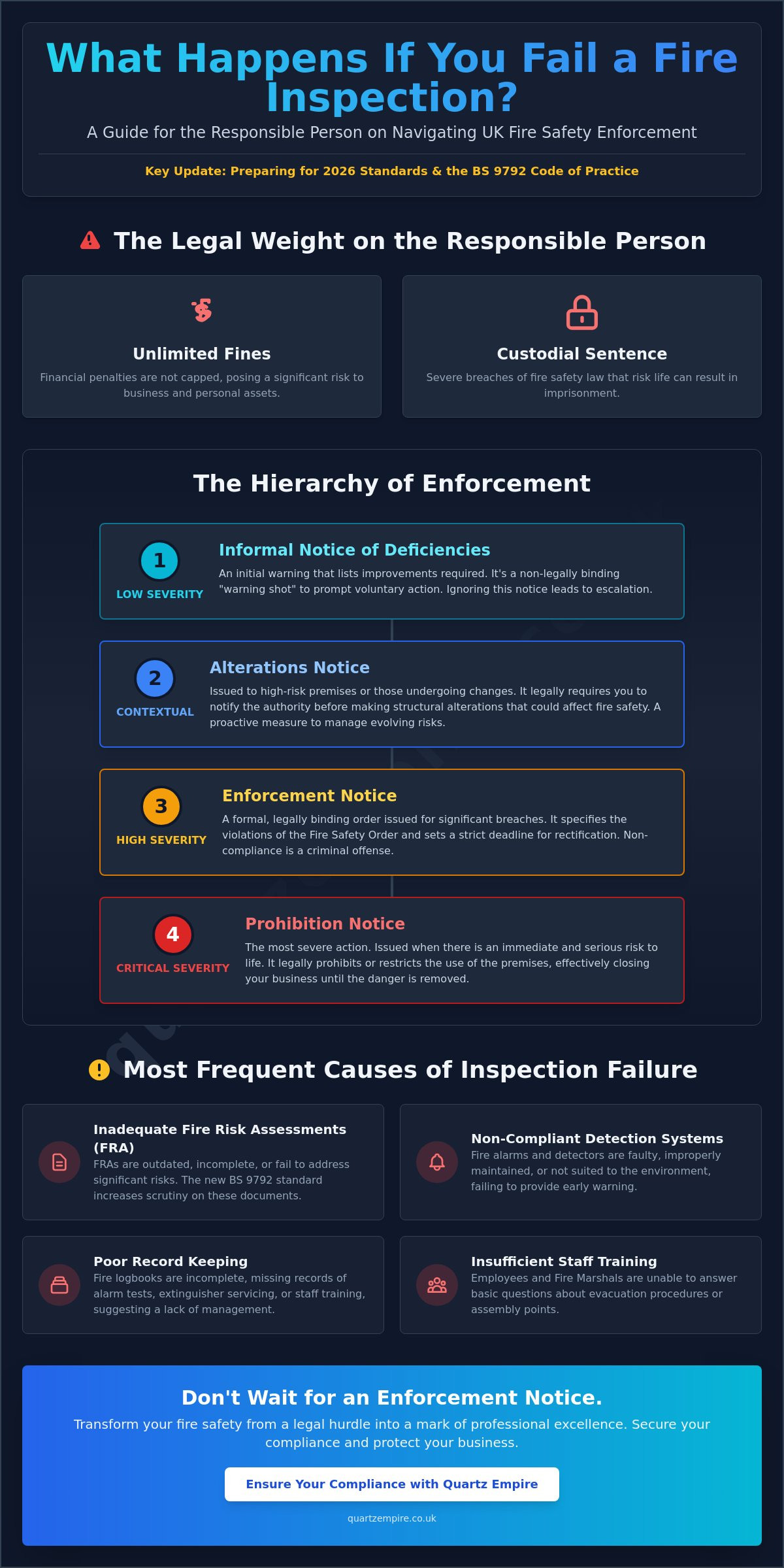
The UK fire safety enforcement regime operates on a structured, sliding scale. If an inspector identifies issues during their visit, they won't always move to shut down your operations immediately. Instead, they typically follow a tiered approach designed to bring your premises back into compliance. The first stage is often a "Notice of Fire Safety Deficiencies." This is an informal notification that acts as a warning shot. It lists the specific improvements you must make but doesn't carry immediate legal penalties. It's vital to treat this notice with the same urgency as a formal order, as ignoring it will lead the authority to escalate their response.
High-risk premises or buildings undergoing significant changes may receive an Alterations Notice. This is a unique tool used by the Fire and Rescue Authority to maintain oversight of complex sites. It doesn't necessarily mean you've failed an inspection yet, but it legally requires you to notify the authority before making any structural changes that could impact fire safety. This ensures that your fire protection strategy remains robust even as your business evolves.
Formal Fire Safety Notices Explained
When the risk to life is significant but not immediate, the inspector will issue an Enforcement Notice. This document provides a clear, legal record of what happens if you fail a fire inspection at a serious level. It specifies which parts of the Fire Safety Order you've breached and sets a firm deadline for completing remedial works. Failure to meet this deadline is a criminal offence. If the inspector discovers a risk so severe that a fire would be life-threatening, they will issue a Prohibition Notice. This is the most serious action possible. It can restrict access to specific areas or close your entire building immediately until the danger is removed. If you receive a formal notice, you have a 21-day window to lodge an appeal in a Magistrates' Court.
Penalties for Non-Compliance in 2026
The legal consequences for failing to adhere to safety standards are more rigorous than ever in 2026. Minor technical breaches can result in fines of up to £5,000 per offence, which can quickly accumulate. However, major breaches involving systemic neglect lead to far more severe enforcement, appeals and penalties. If a court finds that the Responsible Person showed high levels of culpability, they can impose unlimited fines and prison sentences of up to two years. The judiciary now looks closely at whether the failure was accidental or a result of intentional cost-cutting. Ensuring your documentation and hardware meet current standards is the only way to protect yourself from these catastrophic legal and financial risks.
Common Reasons for Inspection Failure: Identifying Your Risks
Identifying potential vulnerabilities before an officer arrives is essential for maintaining a safe operational environment. The most frequent failure point identified by fire authorities is an inadequate or outdated fire risk assessment. Since the introduction of the BS 9792 code of practice, blocks of flats and HMOs face much stricter documentation requirements. If your assessment doesn't reflect the current layout of your building or the specific needs of your occupants, you risk immediate enforcement action. Understanding what happens if you fail a fire inspection begins with recognizing that your paperwork must be a living document, not a forgotten file in a drawer.
Staff awareness remains another critical area of concern. Inspectors frequently find that while hardware is present, the human element of fire safety is lacking. If your team hasn't received recent Fire Marshal Training, they may not know how to coordinate an evacuation effectively. This lack of preparation undermines even the most advanced technical systems. Authorities view training gaps as a serious management failure because they directly impact life safety during an emergency.
Technical Failures in Fire Detection and Suppression
Technical non-compliance often centres on a lack of adherence to BS 5839-1 standards. An unserviced fire alarm installation can quickly become a "zombie system." These are units that appear functional on the surface but possess hidden faults in the wiring or sensors that prevent them from triggering during a fire. Regular maintenance is the only way to ensure these systems remain reliable. If an inspector finds that your alarm hasn't been tested according to the required schedule, they'll likely issue a formal notice.
Suppression equipment also requires meticulous attention. Using the wrong fire extinguisher types for specific risks, such as using water on an electrical fire, creates a secondary hazard. Inspectors check for correct placement, clear signage, and valid service tags. For more detail on how authorities respond to these technical lapses, you can review the official guidance on fire safety enforcement.
Structural and Procedural Deficiencies
Structural integrity is paramount for containing a fire once it starts. Fire doors are your primary defence, but they only work if they're maintained correctly. Inspectors look for functional self-closing mechanisms and intact intumescent seals that expand when heated to block smoke. A common procedural error is the obstruction of escape routes. Whether it's a "temporary" stack of delivery boxes or a locked final exit door, these breaches are never ignored. Finally, your emergency lighting must undergo "duration tests" to prove it can guide occupants to safety during a total power failure. If you don't have records of these tests, you'll quickly learn what happens if you fail a fire inspection through a formal deficiency notice.
Ensuring that structural components like insulation and fire protection meet high standards is a critical part of this process; for an example of technical excellence in these specialized fields, visit MESCH Isolierung & Brandschutz GmbH.
Immediate Steps to Take After Receiving a Fire Safety Notice
Receiving a formal notice from the Fire and Rescue Authority creates immediate pressure, yet it also provides a definitive list of requirements to secure your premises. You must review the document with a professional fire safety consultant to identify the most critical breaches. Prioritising remedial works according to the inspector's deadline is essential for avoiding further legal escalation. This period is also the time to begin building your "Golden Thread" of compliance. By documenting every fix and system upgrade, you create a digital trail that proves your commitment to safety standards under the Building Safety Act 2022. Understanding what happens if you fail a fire inspection involves moving from a state of reactive concern to a state of structured, professional action.
Transparency with the enforcing authority is your most effective tool during this process. Fire safety officers generally prefer to see a proactive business owner who takes their findings seriously. If you demonstrate a clear intent to comply, you reduce the likelihood of the authority pursuing the most severe penalties. Keep all correspondence professional and keep a detailed log of every contractor visit and equipment test conducted during the remediation period.
The Remediation Roadmap
Restoring compliance requires a methodical approach to ensure no detail is overlooked. Follow these three steps to secure your building:
- Step 1: Conduct a professional fire risk assessment. This document identifies the specific gaps in your current strategy and provides the foundation for all subsequent work.
- Step 2: Appoint an accredited installer for system upgrades. Whether you need a new fire alarm installation or updated emergency lighting, using a certified professional ensures the work meets BS 5839-1 or BS 5266-1 standards.
- Step 3: Verification. Before the inspector returns for a follow-up visit, test all new systems and ensure your fire logbooks are fully updated with the latest service records.
Communicating with the Authority
If the required remedial works are complex or require significant structural changes, you may find the initial deadline difficult to meet. In these cases, you can request an extension. You must provide evidence of "due diligence" by showing signed contracts with installers or proof that materials have been ordered. This proactive communication demonstrates that you aren't ignoring the notice, which can mitigate potential fines. Prepare for the follow-up inspection by having all your new documentation ready for review. The inspector will want to see physical evidence of the fixes alongside the supporting paperwork. To ensure your business meets these rigorous standards without delay, contact our specialist team today for professional guidance on restoring your fire safety compliance.
Securing Long-Term Compliance with Professional Maintenance
Transitioning from a reactive "fix-it" mindset to a proactive maintenance strategy is the final step in securing your business. While the immediate aftermath of an audit focuses on remediation, long-term stability depends on consistent oversight. Professional maintenance ensures that your safety hardware remains in peak condition, significantly reducing the likelihood of system failure during a real emergency. By adopting a preventative schedule, you remove the uncertainty of what happens if you fail a fire inspection in the future. Instead of facing the pressure of enforcement deadlines, you possess a continuous record of compliance that satisfies even the most rigorous inspector.
Regular servicing also addresses the issue of "unwanted fire signals," or false alarms. Frequent false alarms place a strain on Fire and Rescue Authority resources and can lead to cost-recovery charges or a loss of priority response. A well-maintained system, calibrated to British Standards, filters out these signals to ensure your alarm only triggers when a genuine threat exists. This reliability builds trust with local authorities and ensures your staff take every alarm seriously. It transforms fire safety from a legal burden into a dependable pillar of your operational resilience.
The Benefits of Maintenance Contracts
Professional maintenance contracts offer more than just hardware checks; they provide a structured framework for logbook management. This documentation serves as your primary legal defence during a surprise visit from an enforcement officer. These contracts allow for the early detection of hardware fatigue across your wider security systems, preventing minor faults from escalating into system-wide failures. Modern access control systems can also be integrated with your fire panel to automatically release secured doors during an evacuation. This integration ensures a fast, safe exit for all occupants, including those requiring Personal Emergency Evacuation Plans (PEEPs) under the April 2026 regulations.
Why Quartz Empire is Your Compliance Partner
Quartz Empire specializes in providing high-level expertise to businesses across London, Kent, and the South East. We understand that the regional enforcement landscape requires a meticulous approach to regulatory adherence. Our team is committed to British Standards and accredited excellence, ensuring that every system we maintain meets the highest professional criteria. We don't just fix problems; we establish long-term collaborative relationships with our clients to ensure their safety and mental well-being. This steadfast approach makes us a reliable partner for your long-term security needs.
Maintaining a "Golden Thread" of digital information is now a standard requirement for building safety. We help you manage this data, providing clear evidence of your due diligence and professional legitimacy. If you're concerned about your current level of protection or want to avoid the consequences of what happens if you fail a fire inspection, we're here to help. Contact Quartz Empire today to schedule a comprehensive fire safety audit and secure the future of your business.
Securing Your Business Future through Proactive Compliance
Navigating the complexities of 2026 fire safety standards requires a move away from reactive fixes toward a structured, professional strategy. You now have a clear understanding of the enforcement hierarchy and the specific technical requirements necessary to maintain a safe environment. From managing your statutory duties to ensuring hardware meets BS 5839-1 standards, every proactive step you take builds a more resilient organization. Although it's stressful to consider what happens if you fail a fire inspection, the process provides a vital opportunity to address hidden risks before they lead to serious legal or physical consequences.
Quartz Empire provides BAFE accredited services and has supported businesses across London and Kent for over 10 years. Our team possesses the specialized knowledge required to ensure your fire detection and suppression systems remain fully compliant. We pride ourselves on being a reliable collaborator for your long-term safety needs. Book a Professional Fire Safety Audit with Quartz Empire to protect your staff and secure your business operations today. We look forward to helping you achieve lasting peace of mind through professional excellence.
Frequently Asked Questions
Can I be sent to prison for failing a fire inspection in the UK?
Yes, you can be sent to prison for up to two years if you're found guilty of serious fire safety breaches. Courts reserve this penalty for cases involving high culpability or intentional neglect. While minor technical failures usually result in fines, systemic disregard for life safety carries the risk of criminal prosecution. This underscores the importance of understanding what happens if you fail a fire inspection at a critical level.
How long do I have to fix fire safety issues after an inspection?
The deadline for fixing issues is determined by the Fire and Rescue Authority and stated clearly on your Enforcement Notice. While minor deficiencies might allow for a longer correction period, serious risks require immediate attention. If you find the timeframe impossible due to complex structural works, you can request an extension. You must provide evidence of your progress and signed contracts with accredited installers to support such a request.
What is the difference between an Enforcement Notice and a Prohibition Notice?
An Enforcement Notice is a legal demand to rectify specific safety breaches within a set timeframe while your business continues to operate. In contrast, a Prohibition Notice is an immediate restriction that prevents access to part or all of your building. Authorities issue Prohibition Notices only when they identify an imminent risk to life. Both notices are serious legal documents that require professional intervention to restore your compliance and protect your operations.
Do I need a new fire risk assessment after failing an inspection?
You'll almost certainly need to update or conduct a new Fire Risk Assessment if your failure was due to outdated documentation. Since the introduction of the BS 9792 code of practice, inspectors expect to see a comprehensive record that reflects current building usage. A professional assessment serves as your roadmap for remediation. It ensures that any new hardware or training you implement aligns perfectly with the inspector's expectations.
Can I appeal a fire safety notice if I think it is unfair?
You have a legal right to appeal any fire safety notice within 21 days of receiving it. These appeals are heard in a Magistrates' Court and can challenge the requirements or the timeframe provided by the inspector. It's advisable to seek professional legal and technical advice before proceeding. An appeal suspends an Enforcement Notice but usually doesn't stop a Prohibition Notice from taking effect due to the immediate safety risks involved.
Who is legally responsible if a business fails its fire inspection?
The "Responsible Person" is legally accountable for fire safety failures under the Regulatory Reform (Fire Safety) Order 2005. This individual is typically the employer, the building owner, or the person in control of the premises. In multi-occupied buildings, there may be several responsible persons who must collaborate to ensure safety. The law increasingly focuses on named individuals to ensure that safety management remains a high priority at the executive level.
What happens if I ignore a fire safety enforcement notice?
Ignoring an enforcement notice is a criminal offence that leads to severe legal consequences. If you fail to act within the specified deadline, the Fire and Rescue Authority can initiate a prosecution. This often results in unlimited fines and a permanent criminal record for the Responsible Person. Understanding what happens if you fail a fire inspection is vital, as the transition from a deficiency notice to a court summons can happen quickly if you remain non-compliant.
How often should commercial fire alarms be serviced to pass inspection?
Commercial fire alarms must be serviced by a competent person at least every six months to comply with BS 5839-1. Inspectors will check your logbooks to verify that these bi-annual inspections have occurred and that any faults were rectified promptly. In addition to professional servicing, you should conduct weekly manual tests. Consistent maintenance prevents "unwanted fire signals" and ensures your system remains a reliable safeguard for your staff and property.