
Fire Extinguisher for Electrical Fire in Office: The Complete UK Guide 2026
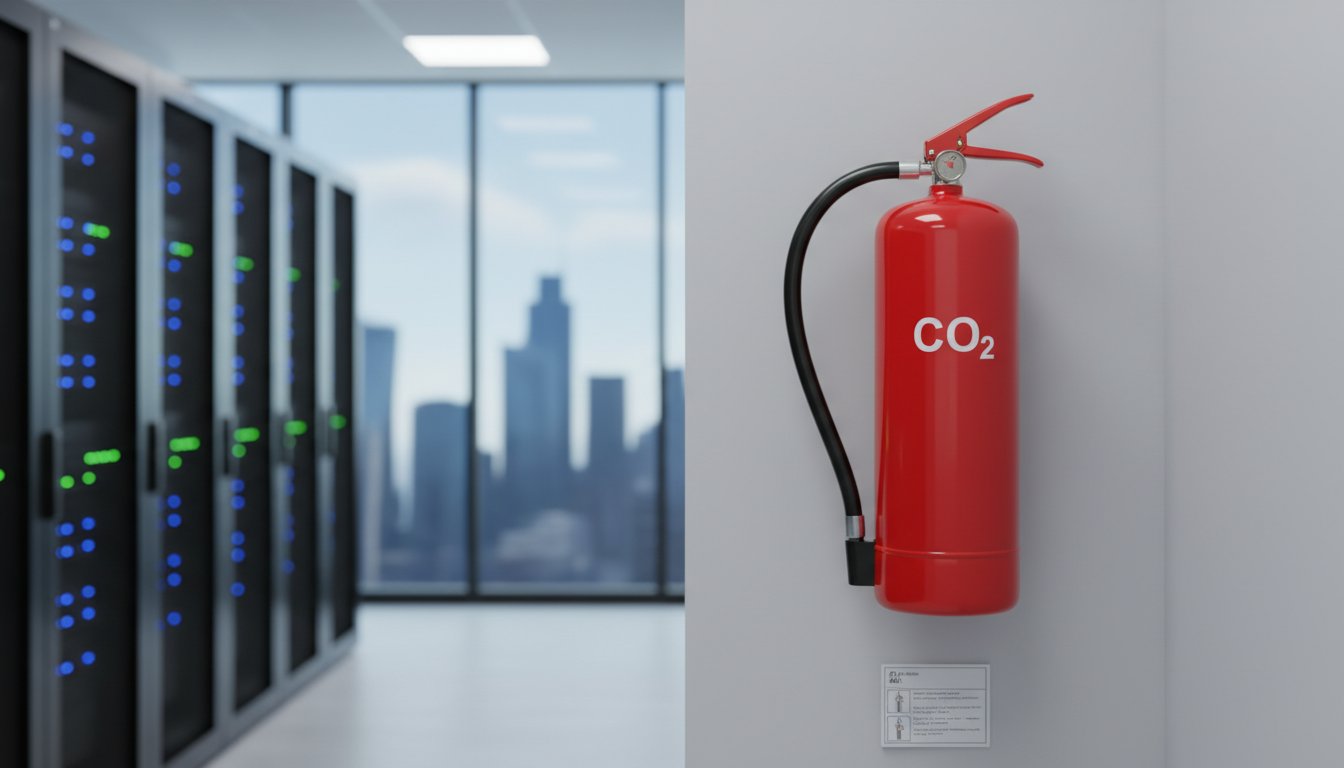
Electrical distribution faults cause 32% of all fires in UK office environments, making them the single largest threat to your physical workplace. This data from the 2024/25 period underscores the urgency of having the correct suppression tools in place. Choosing the right fire extinguisher for electrical fire in office settings is a critical responsibility for any business owner or facilities manager. You shouldn't have to worry that the equipment meant to save your office will instead destroy your servers with corrosive residue or lead to a failed fire safety audit.
We understand the confusion caused by conflicting advice on powder versus CO2 extinguishers. This guide provides the professional clarity you need to protect your personnel and your digital infrastructure. You'll learn how to identify the most effective extinguishers for modern electronics while meeting the latest 2026 UK legal requirements. We'll examine the essential updates to the Regulatory Reform (Fire Safety) Order 2005 and the new Class L standards for lithium-ion batteries, ensuring your workplace remains safe, compliant, and fully operational.
Key Takeaways
- Identify why CO2 is the preferred fire extinguisher for electrical fire in office environments to prevent irreversible damage to mission-critical IT assets.
- Understand the legal requirements of the Regulatory Reform (Fire Safety) Order 2005 and how the 30-metre travel distance rule affects your specific office layout.
- Learn to recognize modern risks like Class L lithium-ion battery fires and why traditional foam or water suppressants pose a lethal risk when used on live equipment.
- Establish a compliant maintenance schedule that distinguishes between mandatory monthly visual inspections and professional annual servicing by a competent person.
- Compare suppression methods to ensure you select a residue-free solution that protects your digital infrastructure from secondary damage during an incident.
Understanding Electrical Fires in the Modern Office Environment
An electrical fire is a fire involving live equipment where the agent must be non-conductive. Unlike fires fueled by wood or paper, these incidents carry a dual threat: the immediate heat of the blaze and the risk of lethal electrocution for the person operating the equipment. Selecting the correct fire extinguisher for electrical fire in office environments is not just about stopping the flames; it's about ensuring the safety of your staff and the integrity of your digital infrastructure.
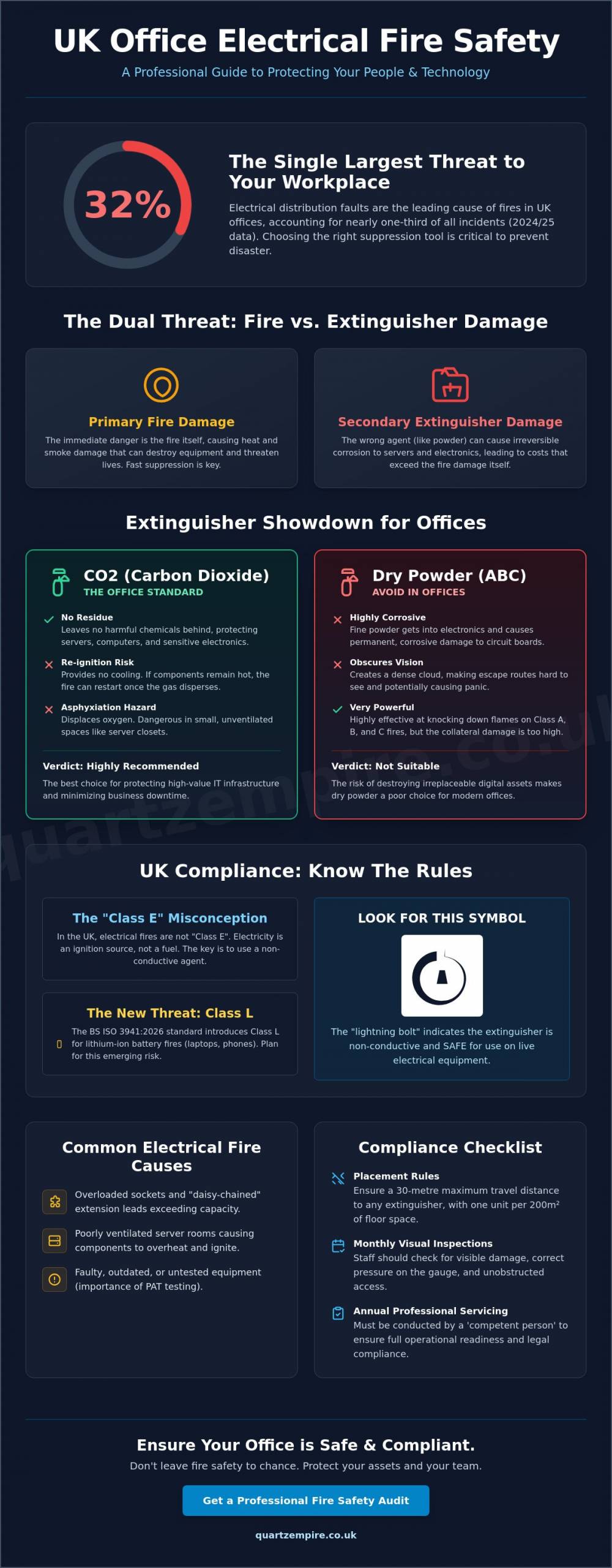
In the UK, electrical fires are technically unclassified because electricity acts as a source of ignition rather than a fuel. Data from the 2024/25 period indicates that electrical distribution faults account for 32% of all office fires, which is the highest of any identifiable cause. Modern offices are packed with high-density fuel sources, including server racks, daisy-chained extension leads, and lithium-ion batteries. These components require specialized suppression methods that can neutralize the heat without conducting a current back to the user.
Common Causes of Office Electrical Fires
Fire risks often stem from everyday office habits that go unnoticed until an incident occurs. Overloaded sockets and the "daisy-chaining" of extension leads are frequent culprits, as they exceed the intended thermal capacity of the wiring. Poorly ventilated server rooms also present a significant hazard; components that overheat in confined spaces can quickly ignite nearby cable insulation. Maintaining a rigorous schedule for portable appliance testing (PAT) is essential for identifying faulty equipment, and you can discover London Emergency Appliance Repair for professional servicing of kitchen units to prevent potential ignition sources.
The "Class E" Misconception
There is a common misunderstanding that electrical fires belong to "Class E." While some international systems use this label, the UK adheres to specific fire extinguisher classifications that exclude electricity as a standalone class. Instead, UK standards categorize fires by fuel types like Class A (solids) or Class B (liquids). In this framework, electricity is treated as a complicating factor rather than a fuel source itself.
To identify an extinguisher safe for live equipment, you must look for the "lightning bolt" symbol on the label. This indicates the discharge is non-conductive and safe for use around high-voltage hardware. Using an agent that conducts electricity, such as water or certain foams, can result in fatal shocks. It's also vital to consider the new Class L classification introduced in March 2026 under BS ISO 3941:2026, which specifically addresses the risks posed by lithium-ion batteries in laptops and smartphones. Choosing the right fire extinguisher for electrical fire in office settings requires understanding these technical nuances to remain legally compliant and physically safe.
Comparing the Best Fire Extinguishers for Electrical Fires
Selecting a fire extinguisher for electrical fire in office spaces involves evaluating more than just suppression power. You must also consider the secondary damage caused by the extinguishing agent itself. In a high-density IT environment, the cost of replacing hardware damaged by a suppression agent can sometimes exceed the cost of the fire damage. Understanding the technical differences between CO2, dry powder, and de-ionised water mist is essential for any business following UK fire safety regulations.
CO2 Extinguishers: The Office Standard
Carbon Dioxide (CO2) is widely regarded as the benchmark for protecting computers and server racks. It works by displacing the oxygen around the fire, which stops the combustion process almost instantly. The most significant benefit is that CO2 leaves no chemical residue. This allows technicians to restart equipment once the area is safe and the fault is rectified. However, CO2 has no cooling effect. If the electrical component remains hot, the fire can re-ignite as soon as the gas dissipates. Users should also be aware of safety risks in confined spaces. Using CO2 in small, unventilated server cupboards can lead to rapid oxygen depletion, posing an asphyxiation risk to the operator.
Dry Powder: Powerful but Destructive
ABC Dry Powder extinguishers are versatile and highly effective at knocking down flames. They're often found in mixed-risk areas because they handle multiple fire types. Despite this, they're generally unsuitable for modern office floors. The powder is extremely fine and highly corrosive. It travels through the air and settles deep inside computer fans, power supplies, and heat sinks. Even if you extinguish the fire, the chemical residue often destroys the delicate circuitry of your IT assets. Powder is best reserved for areas like loading bays, plant rooms, or external storage units where equipment sensitivity is lower.
De-ionised Water Mist: The Clean Alternative
De-ionised water mist is becoming a preferred choice for modern office environments. This technology uses microscopic droplets that are non-conductive, making them safe for use on live electrical equipment. Unlike CO2, the mist provides an immediate cooling effect that significantly reduces the chance of re-ignition. It's an excellent middle ground for businesses that want the cooling properties of water without the electrocution risk. Because it uses pure water, the cleanup is minimal and non-toxic. To ensure your equipment is correctly positioned and maintained, you can consult professional fire extinguisher services to audit your current safety provisions.
To help determine the best placement for your equipment, consider these typical office zones:
- Server Rooms: CO2 or De-ionised Water Mist to ensure residue-free protection.
- Office Floor and Workstations: CO2 to protect individual PCs and laptops.
- Kitchen Areas: CO2 or Wet Chemical extinguishers, as powder can contaminate food preparation surfaces.
- Loading Bays and Plant Rooms: Dry Powder for high suppression in large, industrial spaces.
When planning a renovation of office kitchens or breakrooms, high-quality installations from specialists like Countertops and Cabinetry By Design should always be complemented by a robust fire safety strategy to protect your cabinetry and premium surfaces from damage.
Regulatory Compliance and Strategic Placement
Compliance is not optional. Under the Regulatory Reform (Fire Safety) Order 2005, the designated Responsible Person must ensure that fire safety equipment is correctly selected, positioned, and maintained to protect both life and property. Given that electrical distribution faults are among the top causes of fires in offices, accounting for 32% of incidents, ensuring you have the correct fire extinguisher for electrical fire in office zones is a legal necessity. Failure to meet these standards can result in unlimited fines or criminal prosecution.
Strategic placement is governed by BS 5306-8:2023, which outlines the current code of practice for the selection and positioning of extinguishers. A key requirement for commercial buildings is the 30-metre rule. This states that a person should not have to travel more than 30 metres to reach a fire extinguisher. In high-density IT environments or server rooms, this distance often needs to be shorter to account for the rapid spread of electrical fires. For a more comprehensive look at your legal obligations, refer to our Fire Risk Assessment guide.
Where to Install Extinguishers in an Office
Effective placement requires a detailed understanding of your office layout. You should install extinguishers near high-risk zones such as large printers, server rooms, and floor boxes. In open-plan offices, it's more effective to create Fire Points. These are centralized locations where multiple extinguisher types are grouped together, rather than scattering individual units randomly. According to BS 5306 standards, extinguishers should be mounted on brackets or floor stands. The handle should be approximately 1 metre from the floor for larger units, or 1.5 metres for smaller ones, ensuring they're accessible to all staff members while remaining secure.
Signage and Visibility Requirements
Visibility is just as critical as placement. Every fire extinguisher for electrical fire in office areas must be accompanied by a clear ID sign. These signs use specific colour coding, such as black for CO2, to help staff identify the correct unit from a distance during an emergency. We recommend using photoluminescent signs that remain visible in low-light or smoke-filled conditions. Missing or incorrect signage is a common reason for failed fire safety audits. Ensuring your signage is compliant not only helps guide your team during a crisis but also demonstrates professional legitimacy during regulatory inspections.
Critical Safety Protocols: Handling an Electrical Fire
When an electrical fire breaks out, your immediate response determines the safety of your personnel and the survival of your assets. Panic is the greatest threat in these moments. Using the correct fire extinguisher for electrical fire in office settings requires a calm, methodical approach that prioritizes life safety over equipment recovery. If the fire is larger than a small wastepaper bin or if smoke is obscuring your exit, you should evacuate immediately and leave the suppression to professional fire services.
Isolation is the most critical step in managing an electrical incident. If it's safe to do so, turn off the power at the mains or unplug the affected device. Removing the electrical current eliminates the source of ignition, which often causes the fire to die down significantly. This makes the use of a fire extinguisher for electrical fire in office environments much more effective and prevents the fire from re-igniting once the suppression agent has dissipated. If you cannot safely reach the power switch, do not take unnecessary risks.
To operate a CO2 extinguisher effectively, follow the PASS method with specific adjustments for the discharge horn. First, Pull the safety pin to break the tamper seal. Aim the horn at the base of the flames, but ensure you don't hold the horn itself, as the rapid discharge of gas makes it cold enough to cause frostbite. Squeeze the lever to release the CO2. Finally, Sweep the horn from side to side across the base of the fire until it's completely extinguished. For professional guidance on equipment selection and staff training, contact our team for comprehensive fire extinguisher services.
The Danger of Electrocution
Conductive agents like water or standard foam create a direct path for high-voltage current to reach the operator. This is why non-conductive agents are mandatory for any fire involving live circuitry. You should never touch a smoking or charred cable with your bare hands, as the insulation may have melted, exposing live wires. Even if the fire looks out, the equipment may still be live. Maintain a safe distance until a qualified professional confirms the area is electrically dead.
Integration with Fire Alarms
The first step in any emergency is activating the fire alarm system to initiate a site-wide evacuation. In specialized environments like server rooms, automatic suppression systems using agents like FM200 or Novec 1230 are often installed. These systems flood the room with gas to extinguish fires without human intervention, protecting mission-critical data. Your fire marshals should coordinate the evacuation according to your fire risk assessment, ensuring all personnel are accounted for at the designated assembly point.
- Alert: Activate the nearest fire alarm call point immediately.
- Isolate: Turn off the power supply if it's safe to reach the switch.
- Evacuate: Ensure all staff leave the building via the nearest fire exit.
- Report: Call the fire service and provide specific details about the electrical nature of the fire.
Professional Maintenance and Fire Safety Audits
Installing the correct fire extinguisher for electrical fire in office zones is only the first step toward workplace safety. If a device fails during an emergency, your investment in safety equipment becomes meaningless. UK legislation, specifically the Regulatory Reform (Fire Safety) Order 2005, mandates that all fire-fighting equipment is maintained in an efficient state, in efficient working order, and in good repair. This legal requirement ensures that when a server rack or overloaded socket ignites, your suppression tools perform exactly as intended.
The maintenance of your safety equipment follows a strict dual-layered schedule. Your designated "Responsible Person" should conduct a visual monthly inspection to check for obvious damage, ensure the pressure gauge is in the green zone, and verify that access remains unobstructed. However, this doesn't replace the mandatory annual service. A qualified technician must conduct a full professional inspection every 12 months to certify the equipment. For CO2 units, which are the primary fire extinguisher for electrical fire in office environments, a hydrostatic pressure test and overhaul are required every 10 years to ensure the canister can safely contain high-pressure gas.
Why Professional Servicing is Non-Negotiable
Professional servicing identifies critical "hidden" defects that an untrained eye will likely miss. Technicians look for blocked CO2 discharge horns, which can prevent the gas from reaching the fire, and check for internal corrosion that compromises the canister's integrity. They also ensure the anti-tamper seal is intact and the safety pin hasn't been bent or seized. Once the service is complete, the technician updates the service label. This label serves as your primary evidence of regulatory compliance during fire service audits or when making claims to insurance providers.
Quartz Empire’s Comprehensive Safety Approach
Quartz Empire provides meticulous fire extinguisher services that go beyond simple equipment checks. We integrate our maintenance visits with wider security and safety audits to ensure your business remains fully protected. Our engineers are BAFE-accredited, reflecting our commitment to the highest industry standards and professional legitimacy. We understand the unique risks faced by modern businesses, from high-density server rooms to the growing presence of lithium-ion battery hazards.
We provide long-term reliability for clients across London, Kent, and the South East. Our team doesn't just tick boxes; we offer a collaborative relationship aimed at securing your digital infrastructure and your workforce. Contact us today to arrange a tailored fire safety survey or a comprehensive fire risk assessment. Let us help you maintain a safe, compliant, and stable environment for your business operations.
Securing Your Workplace for the Long Term
Protecting your physical assets and digital infrastructure requires more than just meeting a checklist. It demands a commitment to professional standards and a deep understanding of the unique risks posed by modern electronics. By prioritizing non-conductive agents and adhering to the latest British Standards, you've taken the first step toward a safer office environment. Maintaining this standard involves regular professional oversight to ensure your equipment remains functional during a crisis.
Selecting the right fire extinguisher for electrical fire in office settings is a critical component of your broader safety strategy. Our BAFE accredited technicians specialize in comprehensive fire and security integration across London, Kent, and the South East. We help you bridge the gap between simple equipment installation and full regulatory compliance. Ensure your office is compliant. Book a Fire Safety Audit with Quartz Empire today. Our team is ready to provide the steadfast protection and specialized knowledge your organization deserves to thrive securely.
Frequently Asked Questions
Can I use a foam extinguisher on an electrical fire?
Standard foam extinguishers are not suitable for fires involving live electrical equipment. Because foam is water-based, it conducts electricity and creates a severe risk of fatal shock to the person using it. While some modern foam units have passed a 35kV conductivity test, it's safer to use a dedicated fire extinguisher for electrical fire in office settings, such as CO2, to avoid any risk of electrocution or equipment damage.
What is the best fire extinguisher for a server room?
Carbon Dioxide (CO2) is the most effective choice for server rooms because it is a clean agent that leaves no residue on delicate circuit boards. Unlike other suppressants, it won't cause secondary damage to your hardware. De-ionised water mist is also a strong candidate, as it provides an immediate cooling effect to prevent the fire from re-igniting without the risk of conducting a current through the equipment.
How often do office fire extinguishers need to be serviced in the UK?
UK law requires a professional service and certification by a qualified technician at least once every 12 months. This annual service is a legal requirement under the Regulatory Reform (Fire Safety) Order 2005. Additionally, your staff should conduct a visual monthly inspection to check for damage or pressure loss. Water and foam units require an extended service every five years, while CO2 canisters need an overhaul every ten years.
Is a CO2 extinguisher safe to use in a small office?
CO2 extinguishers are safe for general office use, but you must exercise caution in confined spaces. Because CO2 displaces oxygen to smother the fire, using it in a small, unventilated cupboard can lead to rapid oxygen depletion. Operators should discharge the unit and immediately exit the area to avoid asphyxiation. If your office layout is particularly cramped, consider de-ionised water mist as a non-asphyxiating alternative for your safety strategy.
What colour is the label on an electrical fire extinguisher?
The label on a Carbon Dioxide (CO2) extinguisher, which is the primary fire extinguisher for electrical fire in office environments, is black. While the canister itself is red, the black rectangular block on the front clearly identifies its suitability for electrical risks. Other types have different colours, such as blue for powder or cream for foam. This colour coding helps staff identify the correct tool quickly during a high-pressure emergency.
Do I need a fire extinguisher if my office has a sprinkler system?
Yes, you still need portable fire extinguishers even if your building has an automatic sprinkler system. Sprinklers are designed for large-scale fire suppression and property protection, whereas extinguishers allow staff to tackle small, localized fires before they trigger the main system. UK fire safety regulations mandate that portable equipment is provided and maintained. This ensures you have the tools to stop a minor electrical fault before it causes widespread damage.
Can an electrical fire start if the equipment is turned off?
Electrical fires can certainly start even if the equipment is switched off, provided it remains connected to a power source. Faulty internal components or damaged cables can still overheat and ignite while plugged in. Additionally, modern devices containing lithium-ion batteries pose a fire risk even when completely disconnected. This makes the presence of a correct fire extinguisher for electrical fire in office areas essential for protecting your workplace at all times of the day.
Who is responsible for checking fire extinguishers in a shared office?
In a shared office, the responsibility is split between the landlord and the individual business tenants. The landlord is typically responsible for the common areas and escape routes. However, each employer is the "Responsible Person" for their own leased space. You must ensure your specific office area has a valid fire risk assessment and that your own extinguishers are serviced annually. This ensures your business remains compliant with current UK safety legislation.