
A Complete Guide to Commercial Security Systems for UK Businesses

Protecting your business premises is a critical responsibility, but navigating the world of commercial security can be a daunting task. The technical jargon, from IP cameras to access control, can feel overwhelming, and the fear of choosing a non-compliant solution or an unaccredited installer is a genuine concern for many UK business owners. Selecting the right security systems is not just about technology; it's about ensuring you meet legal and insurance requirements while achieving true peace of mind that your people and property are safe.
This comprehensive guide is designed to provide clarity and confidence. We will walk you through the essential components of a robust security setup, explaining how CCTV, intruder alarms, and access control work together to protect your assets. You will learn how to identify a reliable, certified partner and make an informed decision that safeguards your business for the long term. Our goal is to equip you with the knowledge to invest in a solution that is both effective and fully compliant, deterring theft and unauthorised access effectively.
Key Takeaways
- Understand that effective business security is an integrated solution, combining core components like CCTV, intruder alarms, and access control for comprehensive protection.
- Learn how to assess your specific operational needs and property risks to choose a security system that is both effective and compliant with UK standards.
- Discover why professional installation and maintenance are non-negotiable for ensuring your security systems are reliable and function correctly when you need them most.
- Develop a clear checklist for vetting security providers, focusing on essential factors like industry accreditations, local expertise, and proven reliability.
What is a Commercial Security System (And Why It's Different from Home Security)
A commercial security system is far more than a simple burglar alarm. It is a fully integrated suite of technologies designed specifically to protect a business's unique operational needs. The primary goals are threefold: to safeguard valuable assets and stock, ensure the safety of employees and customers, and maintain compliance with stringent legal and insurance requirements. This professional approach stands in stark contrast to the off-the-shelf, DIY solutions commonly used in residential properties.
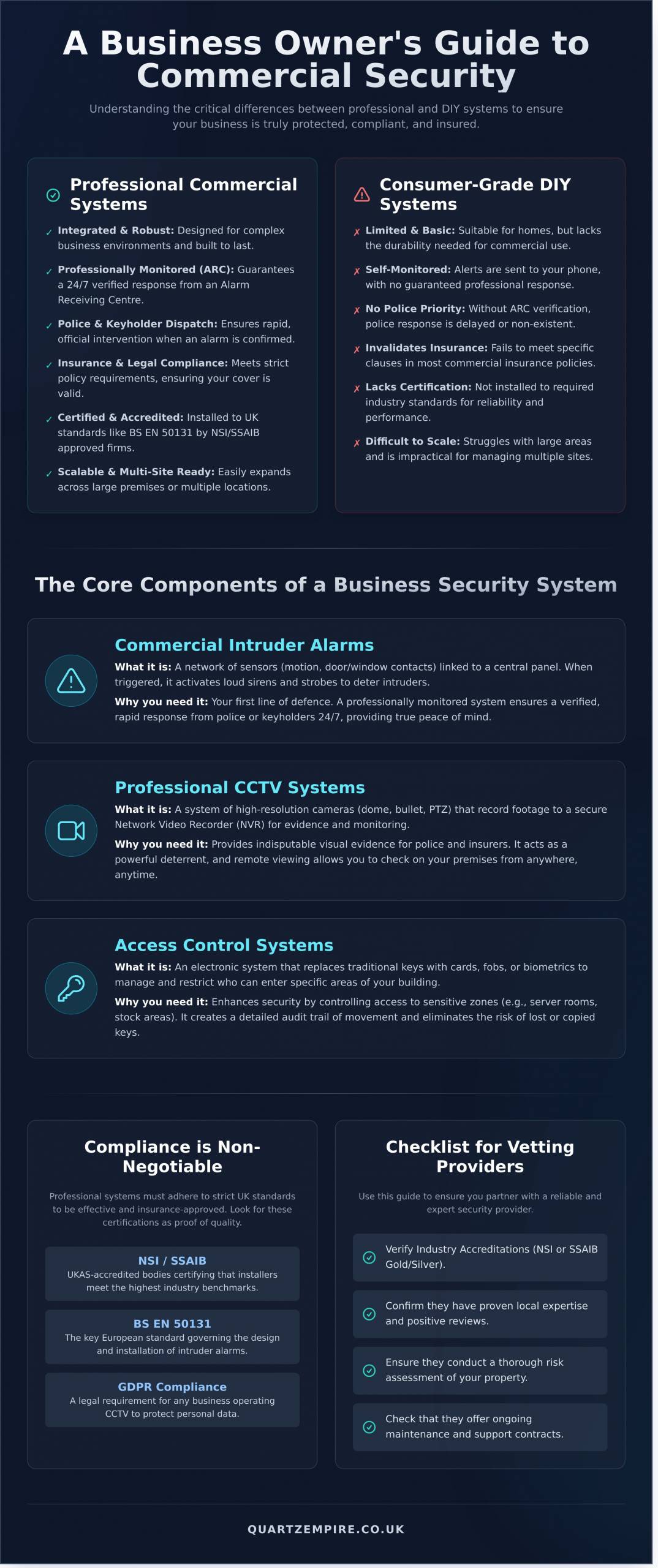
While home security systems like Ring or Lorex are suitable for domestic settings, they lack the robustness, scalability, and certified oversight required for a commercial environment. Business-grade security systems are engineered for durability and designed to scale across large, complex, or multiple premises. Crucially, they almost always include mandatory professional monitoring, ensuring a verified and rapid response to any incident, which is a fundamental requirement for police dispatch and insurance validation.
The Limitations of DIY Systems for Business Use
Relying on consumer-grade equipment for your business exposes you to significant risks. These systems typically lack professional monitoring, meaning alerts go to your phone, not a dedicated Alarm Receiving Centre (ARC). This can delay or prevent police response. Furthermore, they are not built to scale, struggle with multi-site management, and their consumer-grade hardware is often less resilient. Most importantly, a DIY system will likely not meet the specific clauses in your commercial insurance policy, potentially invalidating your cover in the event of a claim.
Key Regulatory Standards for UK Businesses
In the UK, professional security installations are governed by strict standards to ensure reliability and performance. For intruder alarms, the key standard is BS EN 50131, which grades systems based on risk level. To guarantee compliance, it is essential that your chosen provider is certified by a UKAS-accredited body like the NSI (National Security Inspectorate) or SSAIB (Security Systems and Alarms Inspection Board). These certifications are your assurance that the design, installation, and maintenance of your security alarm systems meet the highest industry benchmarks. Additionally, any system with CCTV must be fully compliant with GDPR regulations regarding data protection, a complex legal area that professional installers are equipped to navigate.
The Core Components of a Business Security System Explained
A modern commercial security system is more than just a single device; it is a network of integrated components designed to provide robust protection for your business. Understanding these core pillars helps you build a solution that effectively safeguards your premises, assets, and personnel. Each element plays a distinct role, but their true strength lies in how they work together as one cohesive system.
Commercial Intruder Alarms
What it is: An intruder alarm is your first line of defence against unauthorised entry. The system uses a network of sensors, such as passive infrared (PIR) detectors for motion and magnetic contacts for doors and windows, all linked to a central control panel. When a sensor is triggered, the system activates powerful audible and visual warnings, including sirens and external strobes.
Why your business needs it: A professionally monitored alarm provides a guaranteed rapid response. Unlike basic bells-only systems that simply make a noise, a monitored system alerts an Alarm Receiving Centre (ARC). The ARC can then verify the alarm and initiate a police or designated keyholder response, ensuring threats are addressed 24/7 for complete peace of mind.
Professional CCTV Systems
What it is: Commercial CCTV provides constant visual surveillance of your property. A typical system consists of strategically placed cameras-such as discreet domes, visible bullet cameras, or dynamic Pan-Tilt-Zoom (PTZ) units-that feed footage to a Network Video Recorder (NVR) for secure, high-quality digital storage.
Why your business needs it: High-resolution footage is crucial for identifying individuals and providing clear evidence for police and insurers. Modern cameras with superior low-light performance deliver sharp images day and night, while remote viewing via mobile apps allows you to monitor your premises from anywhere in the world. This visual verification is a powerful deterrent and an invaluable investigation tool.
Access Control Systems
What it is: An access control system manages and restricts movement throughout your building, governing who can go where and when. It replaces traditional keys with more secure and manageable methods, including electronic key fobs, card readers, keypad entry codes, or advanced biometrics.
Why your business needs it: This technology is essential for protecting sensitive areas like server rooms, stockrooms, or offices containing confidential data. It eliminates the risk of lost or copied keys and creates a detailed digital audit trail of every entry. This enhances security, improves operational accountability, and is a vital component of modern security systems.
Physical Perimeter Security
Beyond electronic surveillance, your property's physical boundary is the first line of defence. Robust perimeter security, including commercial-grade fencing and gates, acts as a powerful deterrent and a physical barrier to entry. This is especially vital for warehouses, industrial sites, or any business with external storage or valuable assets. For practical guides on topics like installing fence panels, resources such as the blog at tradefencingonline.co.uk can be invaluable for ensuring a secure installation.
How to Choose the Right Security System for Your Business
Selecting the right commercial security system is a critical decision that directly impacts the safety of your assets, staff, and premises. With a vast array of technologies available, the key is to understand that there is no one-size-fits-all solution. A methodical approach, based on your unique operational needs, will ensure you invest in a system that delivers genuine peace of mind and a tangible return on investment. Our expert process simplifies this choice into three clear steps.
Step 1: Conduct a Thorough Risk Assessment
Before exploring any technology, you must first understand your specific vulnerabilities. A comprehensive risk assessment provides the foundation for an effective security strategy. Begin by asking critical questions about your operations:
- What are my key assets? Identify what you need to protect, from high-value stock and specialised equipment to sensitive digital data and cash holdings.
- Where are my weak points? Analyse all potential entry points, including doors, windows, and delivery bays. Consider internal threats and areas with poor visibility or "blind spots."
- What are my industry-specific risks? A retail environment faces different threats (e.g., shoplifting) than a warehouse (e.g., large-scale theft) or a corporate office (e.g., data breaches).
This assessment should also extend beyond your physical premises to include mobile assets. For many businesses, commercial vehicles are crucial for operations and represent a significant investment. Protecting this fleet from theft or damage is a vital part of a comprehensive security strategy, and specialists like Safe & Sound Mobile offer nationwide installation of vehicle-specific security systems.
Step 2: Define Your Security Objectives
Once you have identified your risks, you can define your goals. What do you need your security system to achieve? Your objectives will determine the type and complexity of the components you require. Consider if your primary goal is to deter intruders, monitor employee activity, control access to restricted areas, or gather high-quality evidence for potential prosecution. You must also decide on the level of oversight needed-from 24/7 professional monitoring to self-monitoring via mobile apps-and whether the system needs to be scalable to accommodate future business growth.
Step 3: Match Components to Your Needs
With clear objectives, you can select the right components to build your ideal solution. Different business types have distinct needs, and matching the technology to the risk is crucial for effective protection. The table below offers a basic guide:
| Business Type | Common Risks | Recommended System Components |
|---|---|---|
| Retail Shop | Shoplifting, staff theft, vandalism, break-ins. | Visible CCTV cameras, intruder alarms, electronic article surveillance (EAS). |
| Office Building | Unauthorised entry, data theft, equipment loss. | Access control systems (for server rooms/main entrances), CCTV, monitored alarms. |
| Warehouse / Industrial | Large-scale theft, trespass, health & safety monitoring. | Perimeter protection, high-definition CCTV with night vision, access control at gates. |
This process ensures your chosen security systems are not just a cost, but a strategic investment in your business's resilience. If you are unsure where to begin, our accredited experts can provide a professional, no-nonsense evaluation of your premises. Need help with an assessment? Contact our experts.
The Importance of Professional Installation and Maintenance
Investing in a high-quality commercial security system is the first step. However, its ultimate effectiveness hinges entirely on the quality of its installation and the diligence of its maintenance. For commercial properties, professional installation by an accredited expert is a fundamental requirement. An improper setup can lead to critical vulnerabilities, unreliable performance, and a system that fails when you need it most, potentially invalidating your insurance cover and leaving your premises exposed.
What to Expect from a Professional Installation
A certified installation provides a meticulous, end-to-end service designed for maximum protection and minimal business interruption. The process begins with a comprehensive site survey to assess risks and design a bespoke system tailored to your operational needs. During the installation itself, expert engineers work efficiently and discreetly. The final stage, commissioning, involves rigorous testing of every component, followed by clear, practical training for your staff to ensure confident system management from day one.
Why Ongoing Maintenance is Crucial
Your security system is a dynamic asset that requires regular attention to perform optimally. Far from being an expense, ongoing maintenance is a crucial investment in its longevity and reliability, safeguarding your business against future threats and operational failures. A proactive maintenance plan ensures:
- Sustained Effectiveness: Regular checks by certified technicians guarantee all components are functioning correctly, from camera focus to detector sensitivity.
- Compliance and Certification: It keeps your system compliant with UK standards and satisfies the stringent requirements often stipulated by insurance policies.
- Reduced Costs: Preventative servicing identifies potential faults before they lead to expensive emergency repairs, system downtime, or disruptive false alarms.
- Future-Proofing: A robust plan includes essential software and firmware updates to protect against emerging cyber threats and enhance system functionality.
To formalise this commitment, a Service Level Agreement (SLA) is essential. An SLA provides a clear schedule for preventative checks and guarantees response times for emergency call-outs, transforming your security from a one-time purchase into a managed, reliable service. As a trusted security partner, Quartz Empire Fire & Security Ltd provides fully accredited installation and tailored maintenance plans that deliver lasting peace of mind.
Finding a Trusted Security Partner in Kent, London & the South East
Choosing the right technology is only half the battle; selecting a reliable installation and maintenance partner is critical to the long-term effectiveness of your commercial security systems. A trusted local expert not only understands the specific challenges facing businesses in Kent, London, and the South East but also provides the responsive service you need for complete peace of mind. This guide will help you vet potential providers and make an informed decision.
Essential Accreditations to Look For
Accreditations are a non-negotiable mark of quality and competence. They prove a company has been independently audited and meets stringent industry standards. Look for providers holding NSI Gold or SSAIB certification. These are the UK's leading certification bodies for the security sector, guaranteeing that all work is compliant, insured, and performed by vetted personnel. For total property protection, a BAFE accreditation signifies proven expertise in fire safety.
Key Questions to Ask a Potential Installer
Before committing to a provider, ensure they are the right fit for your specific operational needs. A professional and experienced installer will welcome your questions. Be sure to ask:
- What is your direct experience in our industry? A provider with a portfolio of work in your sector will design a more effective and compliant solution.
- Can you detail your maintenance contracts and emergency response times? Understand the ongoing support you will receive to minimise downtime and ensure reliability.
- Are you able to provide recent case studies or references? Hearing from similar businesses provides genuine insight into a company's performance and customer service.
The Benefits of an Integrated Fire & Security Provider
Engaging a single, accredited partner to manage both your fire safety and security offers significant advantages. An integrated approach ensures your systems work in harmony, creating a more robust safety solution where, for example, a fire alarm can automatically trigger CCTV cameras and unlock emergency exits. This streamlines project management, simplifies maintenance scheduling with a single point of contact, and often proves more cost-effective. By consolidating your services, you build a stronger relationship with a partner who understands your entire premises. Discover Quartz Empire's accredited services.
Partner with the Experts to Secure Your Business
As we've explored, protecting your business requires more than a simple alarm. Choosing the right commercial security systems involves a deep understanding of your unique risks, the correct components from CCTV to access control, and professional installation to ensure compliance and absolute reliability. This isn't just an expense; it's a fundamental investment in your company's safety, continuity, and the peace of mind you deserve.
At Quartz Empire, we provide this level of expertise with our 'no nonsense' approach. As an NSI Gold & SSAIB Accredited company, we are the trusted security partner for businesses across Kent, London, and the South East. We don't believe in one-size-fits-all solutions; we believe in creating bespoke, reliable protection tailored specifically to your operational needs.
Take the first step towards securing your premises with confidence. Request a free, no-obligation site survey with our expert team today and gain the reassurance that comes from knowing your business is properly protected.
Frequently Asked Questions About Commercial Security Systems
How much does a commercial security system cost?
The cost of a commercial security system depends entirely on your specific requirements. Key factors include the size of your premises, the type of system needed (e.g., CCTV, intruder alarm, access control), and whether you opt for professional monitoring. A simple installation for a small shop may start from around £1,000, while a complex, multi-site integrated system can be tens of thousands. A professional site survey is essential to receive an accurate, compliant quotation tailored to your business.
What are the legal requirements for having CCTV in a UK workplace?
In the UK, workplace CCTV is governed by the Data Protection Act 2018 and UK GDPR. You must have a legitimate and clearly defined reason for surveillance and notify staff and visitors with prominent signage. It is unlawful to record in areas with a high expectation of privacy, like toilets. Access to footage must be restricted to authorised personnel, and you must be registered with the Information Commissioner’s Office (ICO). Seeking expert advice ensures your system is fully compliant.
What is the difference between a monitored and an unmonitored alarm system?
An unmonitored system, or "bells-only" alarm, triggers an audible siren on-site to deter an intruder and alert people nearby. A monitored system is connected to a dedicated Alarm Receiving Centre (ARC). When the alarm is triggered, trained professionals at the ARC verify the incident and can immediately dispatch the police or designated keyholders. Monitored security systems provide a guaranteed, rapid response, offering a superior level of protection for your property and assets.
Can a security system be integrated with my existing fire alarm?
Yes, integrating your security and fire alarm systems is highly recommended for creating a comprehensive life safety solution. A properly integrated system provides enhanced protection; for example, it can be configured to automatically unlock access-controlled doors when a fire is detected, ensuring all escape routes are clear for a safe evacuation. Our accredited engineers can assess your existing infrastructure to ensure a seamless and compliant integration that protects your people and premises.
How often does my business security system need to be serviced?
To ensure optimal performance and reliability, we recommend your business security system is professionally serviced at least once annually. Regular maintenance checks that all components-from cameras and sensors to control panels-are functioning correctly. This is not only crucial for your peace of mind but is also often a mandatory requirement to keep your business insurance policy valid. For monitored systems, a maintenance contract is essential to guarantee police response.
Do I need a security system for my small office or shop?
Yes, a professional security system is a vital asset for any business, regardless of its size. Small businesses can often be viewed as vulnerable targets for theft and vandalism. A visible security presence acts as a powerful deterrent, while recorded footage provides critical evidence for police investigations and insurance claims. Modern systems are scalable and affordable, providing the essential protection needed to secure your staff, stock, and property effectively.