
The Best Fire Extinguisher for Electrical Fires: A UK Business Guide
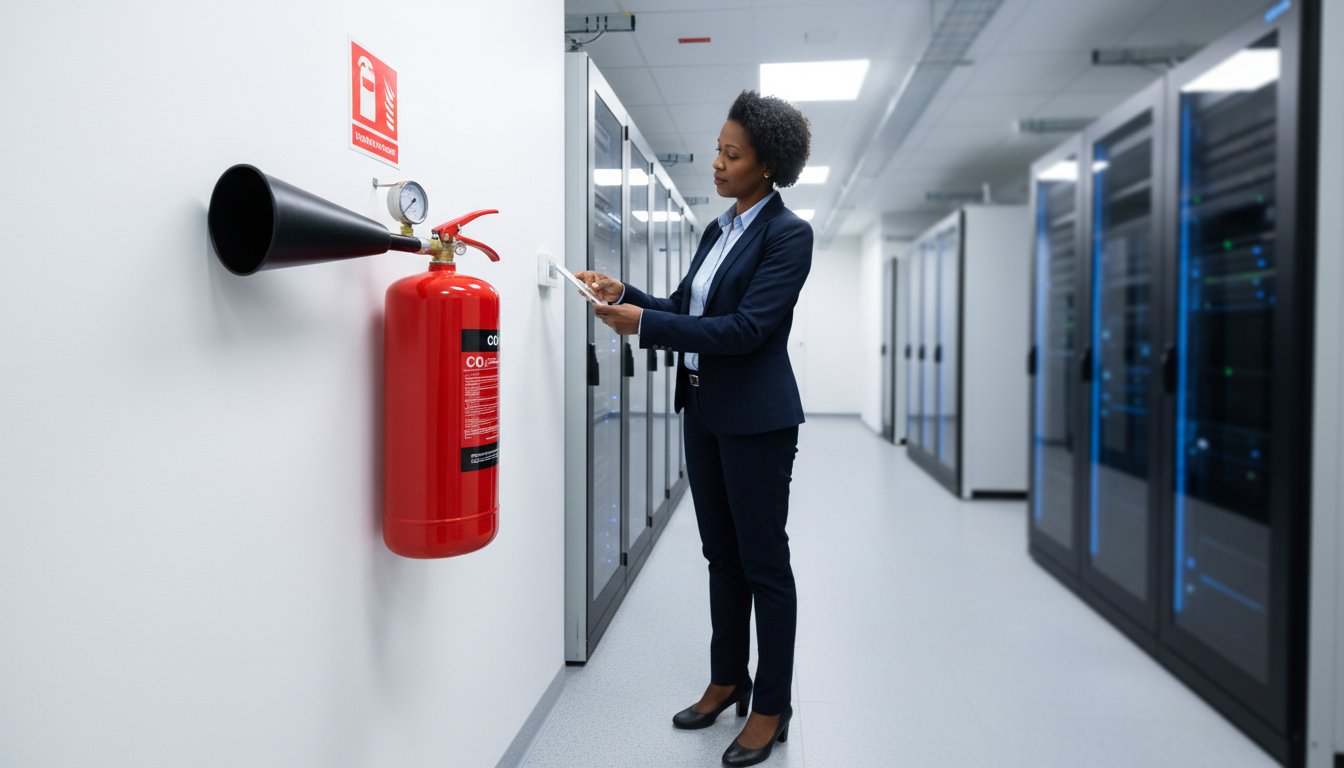
In the critical moments of a fire, reaching for the wrong extinguisher can be a devastating mistake-especially when live electricity is involved. For any UK business owner or facilities manager, the risk of causing electrocution or irreplaceably damaging sensitive electronic equipment is a significant concern. The confusion over different coloured labels and types can lead to hesitation when it matters most, making the choice of the correct fire extinguisher for electrical fire a vital part of your safety strategy.
This guide provides the clear, expert answers you need to act with confidence. We will demystify the options available for your commercial premises, breaking down the key differences between CO2 and Dry Powder extinguishers. By the end of this article, you will be able to confidently identify the appropriate equipment to protect your staff and assets, ensuring your business is fully compliant with UK fire safety law and prepared for any electrical fire hazard.
Key Takeaways
- The primary choice of fire extinguisher for electrical fire situations is CO2 (Carbon Dioxide), which safely smothers flames without conducting electricity or leaving a residue.
- Discover which common extinguishers, particularly water and foam, pose a life-threatening risk of electrocution when used on live electrical equipment.
- Recognise the unique and explosive dangers of lithium-ion battery fires in modern workplaces and why they require a specialised fire safety approach.
- Learn how a professional Fire Risk Assessment is crucial for ensuring not just the correct type, but also the compliant siting and maintenance of your extinguishers.
Understanding Electrical Fires: The Risks and UK Classifications
An electrical fire is a fire involving energised electrical equipment. The cause is often rooted in common workplace hazards such as faulty wiring, overloaded circuits, or malfunctioning machinery. Unlike other fires where the primary fuel source is the burning material itself, the most significant danger with an electrical fire is the live electrical current. Tackling it with the wrong type of extinguisher-such as water-can conduct electricity, leading to severe injury or fatality for the operator.
It is a common misconception that there is a specific 'Class E' for electrical fires in the UK. Under the British and European standard BS EN 2, electrical fires are not given their own classification. Instead, certain extinguishers are tested to confirm they are safe for use on live electrical equipment. While many international fire extinguisher classifications may differ, the UK standard focuses on whether an extinguisher's agent is non-conductive. This distinction is critical for compliance with The Regulatory Reform (Fire Safety) Order 2005, which mandates that businesses provide appropriate fire-fighting equipment for the specific risks present.
Common Causes of Electrical Fires in the Workplace
Proactive risk assessment is essential to prevent electrical fires. The most frequent triggers are often preventable and highlight the importance of regular safety checks and employee training. Key causes include:
- Faulty or aged wiring: Degraded insulation and poor connections are a leading cause of short circuits.
- Overloaded sockets and circuits: Using multi-plugs or extension leads to power high-wattage equipment can cause overheating.
- Malfunctioning appliances: Electrical equipment that is not properly maintained or is faulty presents a significant fire risk.
- Lack of maintenance: Neglecting routine inspections and Portable Appliance Testing (PAT) allows potential hazards to go unnoticed.
Decoding Extinguisher Labels: The 'Electrical' Symbol
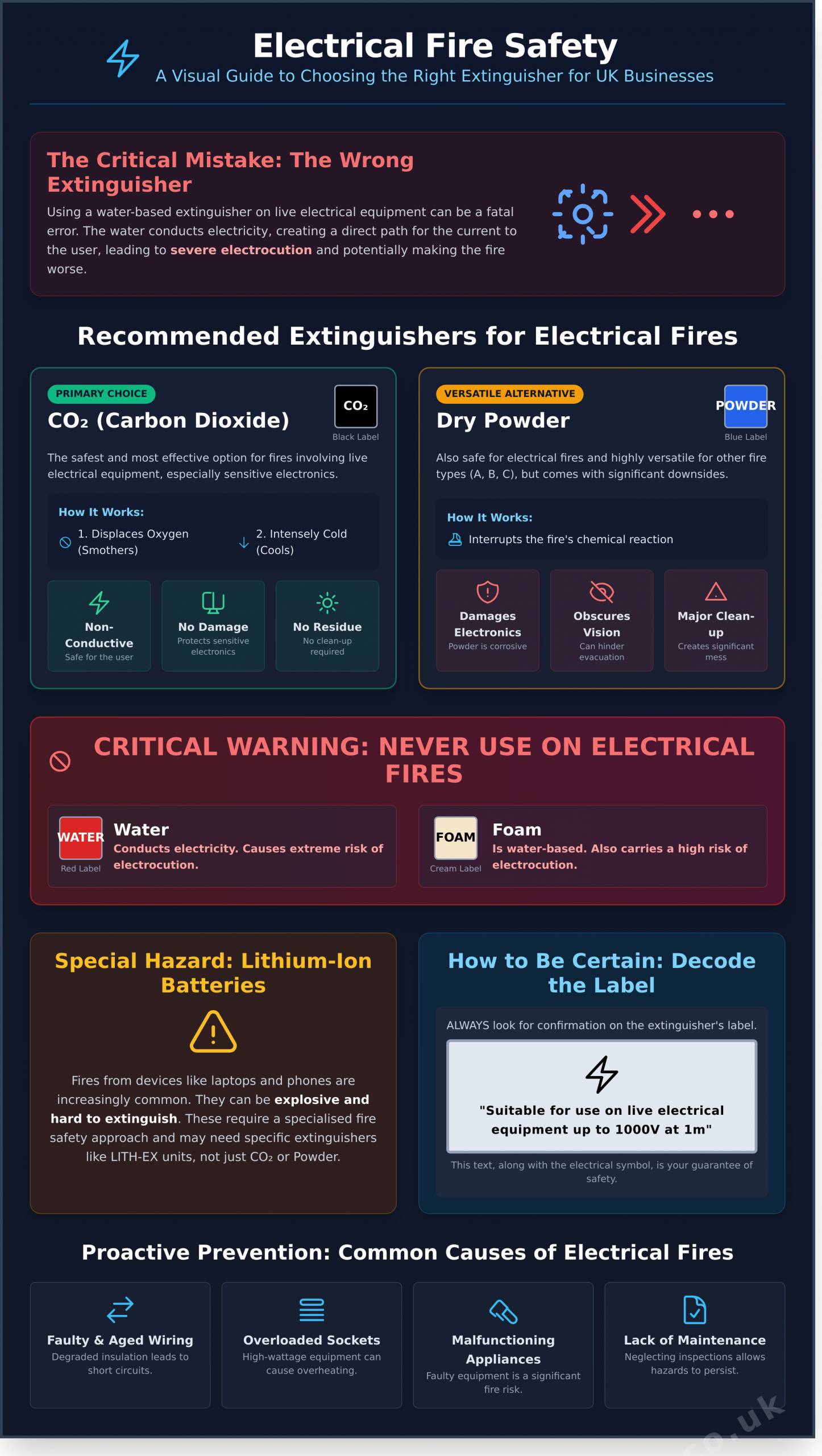
When selecting a fire extinguisher for electrical fire scenarios, the most important indicator is the electrical safety rating on the label. This is often represented by a lightning bolt symbol. Crucially, the label will state that the extinguisher is "suitable for use on live electrical equipment up to 1000V at 1m". This confirmation is your guarantee that the extinguishing agent is non-conductive. It is absolutely essential to verify this rating before purchasing or using an extinguisher on an electrical source, ensuring the safety of the person operating it.
The Primary Choice: CO2 (Carbon Dioxide) Fire Extinguishers
When selecting a fire extinguisher for electrical fire scenarios, the CO2 (Carbon Dioxide) extinguisher is the industry-standard and recommended solution. Its effectiveness stems from a dual-action mechanism: the high-pressure discharge of CO2 gas displaces the oxygen surrounding the fire, effectively smothering it. Simultaneously, the gas is extremely cold as it leaves the extinguisher, which helps to cool the overheating equipment.
In compliance with UK standards, these units are easily identified by their black colour-coded label. A distinctive feature is the large, horn-shaped nozzle designed to disperse the gas over a wide area. As a trusted partner in fire safety, we advise that understanding how to identify and use the correct extinguisher is a critical part of any workplace fire safety plan, a point reinforced by official UK guidance on fire extinguishers from the Health and Safety Executive (HSE).
Advantages of Using CO2 Extinguishers
The primary benefit of a CO2 extinguisher is its non-damaging and non-conductive nature, making it the superior choice for protecting valuable electrical assets. Key advantages include:
- Completely Non-Conductive: Carbon dioxide is a gas that does not conduct electricity, ensuring the user is protected from the severe risk of electric shock when tackling a live electrical fire.
- No Damage to Equipment: Unlike powder or foam, CO2 leaves no residue. This is essential for protecting sensitive electronics like computers, servers, and machinery from permanent damage.
- No Clean-Up Required: The gas dissipates into the atmosphere after discharge, meaning there is no mess to clean up. This minimises operational downtime after an incident.
Limitations and Safety Considerations
While highly effective, it is crucial to understand the limitations of a CO2 fire extinguisher for electrical fire suppression. The main safety risk is asphyxiation; in a confined, unventilated space, the discharged CO2 can quickly reduce oxygen levels to a dangerous point. Other considerations include:
- Reduced Effectiveness Outdoors: In windy or draughty conditions, the gas can be dispersed too quickly to effectively smother the fire.
- Risk of Cold Burns: The discharging gas and nozzle become extremely cold (around -78°C), which can cause severe cold burns if they come into contact with skin.
- Potential for Re-ignition: Because CO2 primarily smothers a fire, it may not cool the source materials sufficiently. Once the gas disperses, hot components could re-ignite if the power source is not isolated.
Ideal Environments for CO2 Extinguishers
Given their specific properties, CO2 extinguishers are expertly suited for environments where electrical equipment is prevalent and its preservation is a priority. We typically install and maintain these units in:
- Server rooms and data centres
- Offices with a high concentration of computers and peripherals
- Electrical switchgear rooms and control panels
- Laboratories with sensitive electronic instruments
The Versatile Alternative: Dry Powder Fire Extinguishers
Often referred to as 'ABC' extinguishers, dry powder units are among the most common fire safety devices in the UK, easily identified by their solid blue label. Unlike CO2 extinguishers that cool and displace oxygen, a dry powder fire extinguisher for electrical fire situations works by releasing a fine powder that chemically inhibits the combustion process, effectively smothering the flames. This mechanism makes it exceptionally versatile, capable of tackling Class A (solids), Class B (flammable liquids), and Class C (flammable gases) fires, in addition to those involving live electricals.
When to Choose a Dry Powder Extinguisher
The primary advantage of a dry powder extinguisher is its powerful, rapid knockdown capability. It is an excellent choice for large, fast-spreading fires where immediate, overwhelming force is required. This makes it suitable for outdoor electrical hazards, such as substations or external generators, where the mess is less of a concern. Its effectiveness on flammable liquids and gases also makes it a reliable choice for environments where an electrical fault could ignite secondary fuel sources, such as in a large commercial workshop or vehicle garage.
Significant Disadvantages for Electrical Equipment
Despite its power, the use of dry powder on sensitive electrical equipment comes with significant drawbacks. The agent is a fine, pervasive dust that can cause irreversible damage. When considering this type of fire extinguisher for electrical fire protection, it is critical to understand the consequences:
- Equipment Damage: The fine powder penetrates casings and vents, coating delicate circuit boards and components. This residue is often corrosive, especially in the presence of moisture, leading to long-term equipment failure.
- Difficult Cleanup: The powder residue is extremely difficult and costly to clean up, often requiring specialist services to avoid further damage to surrounding assets.
- Impaired Vision: Upon discharge, the extinguisher creates a dense, suffocating cloud of powder. In an enclosed space, this severely impairs vision and can cause breathing difficulties, complicating a safe and orderly evacuation.
Where Dry Powder Makes Sense
Due to the risk of collateral damage, dry powder extinguishers are best reserved for specific, high-risk environments where their versatility outweighs the potential for mess and corrosion. They provide robust, compliant protection in locations such as commercial vehicle bays, garages, and large workshops where machinery is less sensitive than office electronics. They are also the standard choice for boiler rooms, areas with flammable liquid or gas storage, and construction sites, where the fire risks are varied and unpredictable.
Critical Safety: Extinguishers to NEVER Use on an Electrical Fire
Using the incorrect extinguisher on a live electrical fire is not just ineffective; it is a life-threatening mistake. The fundamental safety principle is that water conducts electricity. Any extinguisher containing a water-based agent can turn a containable incident into a fatal one by creating a direct path for the electrical current to travel from the equipment, through the extinguishing agent, and to the person holding the unit. This can result in severe electrocution.
Before ever attempting to tackle a blaze, you must be certain you have the correct equipment. Understanding which types to avoid is just as crucial as knowing which ones are safe. The simple table below outlines the basic dos and don'ts for quick reference.
.safety-table {
width: 100%;
border-collapse: collapse;
margin: 20px 0;
font-size: 1em;
}
.safety-table th, .safety-table td {
border: 1px solid #ddd;
padding: 12px;
text-align: left;
}
.safety-table th {
background-color: #f2f2f2;
font-weight: bold;
}
.safety-table .unsafe {
color: #D32F2F;
font-weight: bold;
}
.safety-table .safe {
color: #388E3C;
font-weight: bold;
}
| Extinguisher Type (UK Label Colour) | Safe for Electrical Fires? |
|---|---|
| CO2 (Black) | YES |
| Dry Powder (Blue) | YES |
| Water (Red) | NO - EXTREME DANGER |
| Foam (Cream) | NO - DANGER |
| Wet Chemical (Yellow) | NO - DANGER |
Water and Water Mist Extinguishers (Red Label)
A standard water extinguisher is the most dangerous choice for an electrical fire. Discharging water onto energised equipment creates a direct and highly efficient channel for electricity, posing an immediate risk of electrocution. While specialist de-ionised water mist units exist and are safe for electrical use, they require expert assessment and are not standard. Unless you are a trained professional who can verify the unit is de-ionised, you must assume any red-labelled extinguisher is a deadly hazard around live electricity.
Foam Extinguishers (Cream Label)
Foam extinguishers are over 90% water and are therefore highly conductive. Applying foam to an electrical fire will not only fail to extinguish the source effectively but can also spread the electrical current across a wider surface area as the foam expands. This significantly increases the risk of electric shock. These units are expertly designed for Class B flammable liquid fires (like petrol or paint) and must never be considered a suitable fire extinguisher for electrical fire incidents.
Wet Chemical Extinguishers (Yellow Label)
Found primarily in commercial kitchens, wet chemical extinguishers are specialist units for tackling Class F fires involving cooking oils and fats. The agent is a water-based alkaline solution, making it conductive and completely unsuitable for electrical fires. It is critical that these units are not moved from their designated kitchen environment to an office or server room, where the risk of electrical fire is much higher. Using one on a computer or switchboard poses a serious and avoidable risk.
The critical takeaway is to always check the extinguisher’s label before use. This simple, decisive action is your most important safety measure in a high-stress situation, ensuring you protect yourself and others from harm.
Special Consideration: Tackling Lithium-Ion Battery Fires
The proliferation of devices powered by lithium-ion batteries-from laptops and smartphones to power tools and electric vehicles-introduces a unique and hazardous fire risk into modern commercial environments. While these are technically electrical fires, their chemical nature means that a standard fire extinguisher for electrical fire may only address the initial flames, failing to stop the underlying, and far more dangerous, reaction.
Understanding this distinction is critical for ensuring your premises are properly protected against this growing threat. These fires do not behave like typical combustible or electrical incidents and require a specialist approach to guarantee effective suppression and prevent re-ignition.
The Challenge of Thermal Runaway
Lithium-ion battery fires are defined by a process called thermal runaway. When a battery cell is damaged or short-circuits, it can generate intense heat, triggering a violent, self-sustaining chemical chain reaction. This heat spreads to adjacent cells, causing a cascade of failures that can be extremely difficult to control. During this process, the battery releases toxic and highly flammable gases, which can lead to explosive ruptures. A significant danger is the high potential for re-ignition, which can occur hours after the fire appears to be extinguished.
Specialist LFX and AVD Extinguishers
To combat the unique challenges of thermal runaway, specialist extinguishers have been developed. The most effective modern solution is Aqueous Vermiculite Dispersion (AVD), found in LFX extinguishers. AVD agent is deployed as a mist that both cools the burning cells and creates a non-conductive thermal barrier over the battery. This film effectively smothers the fire, encapsulates the battery to prevent the reaction from spreading, and provides a reliable defence against re-ignition.
We recommend these certified extinguishers for any area with a high concentration of lithium-ion batteries, such as IT server rooms, workshops, battery charging stations, and data centres. Assessing these specific risks is a vital component of a compliant fire safety strategy. Need advice on battery risks? Speak to our accredited experts.
Ensuring Compliance: Extinguisher Siting, Maintenance, and Training
Selecting the correct type of extinguisher is the vital first step. However, to ensure your business is fully compliant and your people are protected, you must implement a robust strategy for correct placement, routine maintenance, and effective staff training. This process should always be informed by a professional Fire Risk Assessment, which identifies specific electrical hazards and dictates the necessary safety measures for your premises.
Correct Placement and Installation
The correct placement of a fire extinguisher for electrical fire risks is critical for enabling a rapid and safe response. A certified engineer will ensure units are sited in accordance with BS 5306 guidelines. Key considerations include:
- Proximity to Hazards: Positioned near high-risk areas such as server racks, switchgear rooms, fuse boards, and large office equipment.
- Visibility and Access: Clearly visible on a dedicated stand or wall bracket, with no obstructions blocking the path or the unit itself.
- Travel Distance: Located on designated escape routes, ensuring no person is more than 30 metres from an appropriate extinguisher.
The Importance of Annual Servicing
For any UK business, the annual servicing of fire extinguishers by a competent, certified person is a legal requirement under The Regulatory Reform (Fire Safety) Order 2005. During a professional service, an engineer will meticulously check that the unit is fully operational, inspecting the pressure gauge, safety pins, seals, and the physical condition of the cylinder. Relying on an un-serviced unit is a significant risk that could lead to equipment failure when it is needed most, compromising safety and leaving your business liable.
Empowering Your Team with Fire Safety Training
A fire extinguisher is only effective if your staff feel confident and competent enough to use it correctly and safely. Professional training empowers your team to act decisively. All personnel should be familiar with the simple P.A.S.S. technique:
- Pull the pin at the top of the extinguisher.
- Aim the nozzle at the base of the fire.
- Squeeze the lever slowly and evenly.
- Sweep the nozzle from side-to-side.
Crucially, training also covers when not to fight a fire-if it is spreading rapidly, if the room is filling with smoke, or if an escape route is not clear. As your trusted partner in fire safety, Quartz Empire provides expert installation, BAFE-certified servicing, and comprehensive staff training. To ensure your business is fully protected and compliant, contact our team today.
Ensure Your Business is Protected and Compliant
Choosing the right fire extinguisher for electrical fire risks is a foundational element of workplace safety. As this guide has shown, CO2 extinguishers are the superior choice for protecting live electrical apparatus, while options like dry powder serve as a versatile alternative. However, possessing the correct equipment is only the first step. True safety and legal compliance are achieved through strategic siting, regular professional maintenance, and thorough staff training, creating a comprehensive fire safety plan.
At Quartz Empire, we provide a no-nonsense approach to fire safety for businesses across Kent, London, and the South East. As your BAFE & NSI Gold Accredited partner, we deliver expert fire extinguisher supply, installation, and maintenance services, ensuring you are fully prepared and compliant. Our goal is to provide you with reliable protection and complete peace of mind.
Take the definitive step in securing your premises and protecting your team. Book a free site survey to ensure your business is compliant.
Frequently Asked Questions
Can I use a dry powder extinguisher on my office computers?
While a dry powder extinguisher will extinguish an electrical fire, it is not recommended for use on sensitive office equipment like computers and servers. The fine powder is corrosive and incredibly difficult to clean, often causing permanent damage to electronic components beyond repair. For this reason, a CO2 extinguisher is the expert-recommended choice for protecting valuable electrical assets, as it leaves no harmful residue and minimises collateral damage to your equipment.
How do I know if a fire extinguisher is safe for electrical use?
To confirm an extinguisher is safe for electrical hazards, you must check the classification label on the cylinder. A compliant fire extinguisher for electrical fire risks will feature a specific symbol indicating it has passed a dielectric test, making it non-conductive. CO2 extinguishers are inherently safe for this purpose. Always verify this rating before purchase or use, as using the wrong type, such as a water-based unit, on live equipment can be extremely dangerous.
What size CO2 extinguisher do I need for a small office or server room?
For a small office with standard computer equipment, a 2kg CO2 extinguisher is typically sufficient to tackle an isolated fire. However, for a dedicated server room or an area with a high concentration of critical IT infrastructure, a 5kg CO2 model provides a greater and more reliable level of protection. A professional fire risk assessment is the most accurate way to determine the precise size and number of units required to keep your business fully compliant and safe.
How often do fire extinguishers need to be replaced in the UK?
In the UK, fire extinguishers require regular servicing rather than routine replacement at a fixed date. A certified technician must perform a basic service annually. CO2 extinguishers legally require an overhaul and pressure test every 10 years, while powder and foam units require an extended service every 5 years. An extinguisher must be replaced immediately if it is ever discharged, damaged, or fails its certified inspection, ensuring your premises remain protected.
Is it a legal requirement to have a CO2 extinguisher in an office?
While the law does not explicitly name CO2 extinguishers, The Regulatory Reform (Fire Safety) Order 2005 legally requires businesses to provide appropriate firefighting equipment for the specific risks present. Since nearly all offices contain electrical equipment like computers, a CO2 extinguisher is identified as the appropriate type during a fire risk assessment. Therefore, having a CO2 unit to mitigate electrical fire risks is considered a legal necessity for compliance and safety.
What should I do after using a fire extinguisher on an electrical fire?
After using a fire extinguisher on an electrical fire, your first step is to ensure everyone is safe and the fire is completely extinguished. The affected equipment must not be powered on until a qualified electrician has thoroughly inspected it and the surrounding wiring. The used fire extinguisher must be immediately removed from service and either professionally recharged or replaced by a certified provider to ensure your business remains compliant and prepared for any future incidents.